Best Acuity Scheduling Alternatives for Tattoo Shops
If you’re hunting for the best Acuity Scheduling alternatives for tattoo shops, you’re probably tired of juggling DMs, no-shows, and messy calendars. You need a booking system that fits how tattoo studios actually work: deposits, long sessions, walk-ins, and artists with their own styles and schedules.
This guide breaks down the strongest options, what they do well, and where they fall short for tattoo work. By the end, you’ll know exactly what to look for in a replacement and how to switch without blowing up your schedule or annoying your clients.
Key Takeaways
- Acuity isn’t built specifically for tattoo shops, so some workflows always feel forced.
- Look for tools with strong features like deposits, reminders, and client messaging.
- Bookedin is one of the few options designed to calm shop chaos, not just book time slots.
- Test each alternative with real clients before fully switching your studio over.
- Choose software that supports multiple artists, long sessions, and custom forms.
Why Tattoo Shops Look for Acuity Alternatives
Tattoo studios often start with Acuity because it’s popular, cheap to test, and easy enough for basic bookings. But once your shop gets busy, the cracks show fast.
Long tattoo sessions, complex consultations, and artists with different rules don’t always fit into Acuity’s more generic structure. You might find yourself hacking together workarounds for deposits, reschedules, and multi-artist schedules, or still chasing people manually in DMs.
Many shop owners also want more control over no-shows, cancellations, and communication without living in their inbox.
That’s where dedicated tattoo booking software and other alternatives come in. They aim to reduce chaos, protect your time, and keep your calendar clean so you can focus on tattooing instead of admin.
- Acuity works, but it’s not tailored to tattoo workflows.
- Long sessions and multiple artists can get clunky.
- Deposits and no-show control often need workarounds.
- Studios want less manual messaging and more automation.
If you’re constantly adjusting settings, chasing clients, or double-checking every booking, that’s a sign you’ve outgrown Acuity. An alternative should make your day simpler, not add more steps.
What Tattoo Shops Actually Need From Scheduling Software
Before you jump to another app, get clear on what your shop really needs. Tattoo studios aren’t hair salons or yoga studios. You deal with large pieces, custom art, and high-ticket sessions that can run half a day or more.
Your software should handle variable session lengths, easy rebooking, and deposits that stick. You also need strong client messaging and reminders so clients show up prepared, on time, and with reference photos or forms completed.
If you run a multi-artist shop, you need a shared calendar that still respects each artist’s rules, hours, and pricing. Finally, your booking tool should cut down on back-and-forth messages, not just move them into a different inbox. The right alternative will feel like a front desk assistant that never sleeps.
- Support for long, custom, and multi-session bookings
- Built-in deposits and clear cancellation rules
- Automated reminders and client messaging
- Shared calendar that still respects each artist’s setup
When you compare Acuity alternatives, judge them on how well they match your real workflow, not just on how pretty the interface looks.
5 Best Acuity Scheduling Alternatives for Tattoo Studios
Now, let’s take a look at our top five picks.
1. Bookedin
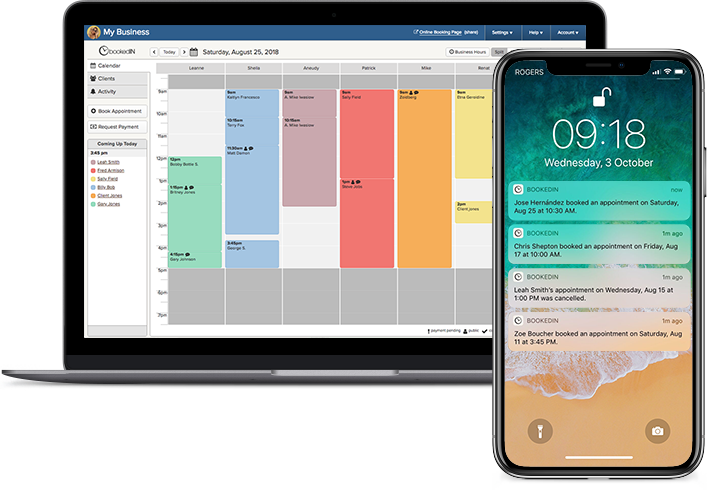
Bookedin is built to calm the exact chaos most tattoo shops deal with daily. Instead of just giving you time slots, it gives you a booking page that clients can use 24/7, with your rules baked in.
You can require deposits to lock in serious clients, send automatic reminders, and manage everything from a single calendar that supports multiple artists. Bookedin also helps reduce no-shows by making your policies clear and collecting money up front when needed.
Overall, it’s designed so your team can focus on tattoos, not spreadsheets. So, if you want an Acuity alternative that understands tattoo studios specifically, Bookedin is one of the strongest options to test first.
2. Square Appointments
Square Appointments is a solid option if your shop already uses Square for payments and you want everything under one roof. It offers online booking, a basic calendar, and built-in payment processing, which can be convenient for smaller studios or solo artists.
You can set up card-on-file, prepayments, and cancellation fees, which helps with no-shows. However, Square is designed more for salons and general service businesses, so some tattoo-specific needs, like very long custom sessions or complex consult flows, may feel limited.
The interface is clean, but customization for each artist’s unique style and rules can be less flexible than tattoo-focused tools. If your main priority is simple booking plus payments, and you don’t mind some compromises, Square can be a workable Acuity alternative.
3. Vagaro
Vagaro is a feature-heavy platform aimed at salons, spas, and wellness businesses, but some tattoo shops use it as an Acuity alternative. It offers a strong calendar, client profiles, memberships, and marketing tools. If you like having every possible feature in one place, Vagaro can be attractive.
The trade-off is complexity. Setup can be time-consuming, and many features you don’t need may clutter the interface. Tattoo-specific workflows, like long custom sessions, multi-day projects, and detailed consent forms, may require extra configuration.
Vagaro can handle deposits and reminders, but it’s not built with tattoo culture in mind. For some studios, it feels like using a full salon management system just to book tattoos, which can be overkill if you mainly want clean scheduling and fewer no-shows. It works best if you want a salon-style system and don’t mind learning a more complex platform to replace Acuity.
4. Fresha
Fresha offers online booking, a calendar, and payment tools, plus a built-in marketplace where clients can discover your shop. That marketplace is the main draw: It can help new clients find you without extra marketing.
For tattoo shops, Fresha can handle basic bookings and reminders, but it’s still more salon-focused. You may find limits around long custom sessions, detailed project notes, and artist-specific rules.
Another factor is control. With marketplace-style platforms, clients may see your competitors right next to you, and some shops don’t like that. Fees and policies can also change over time, so you’ll want to read the fine print. As an Acuity alternative, Fresha is useful if you value exposure and simple booking more than deep customization for your shop’s workflows.
5. Calendly
Calendly is popular for meetings and calls, not tattoos, but some artists use it for quick consults. It’s simple, clean, and easy for clients to grab a time slot for a video or in-person consultation. For full tattoo booking, though, Calendly falls short.
It doesn’t handle deposits, complex service types, or multi-artist shop setups the way a tattoo studio needs. There’s no built-in way to manage long sessions, multi-session projects, or detailed client forms beyond basic questions.
If you only want a tool to schedule consult calls and you handle everything else manually, Calendly can be a light Acuity alternative. But if you’re trying to replace your full booking workflow, you’ll quickly run into limits that cost you time and control.
FAQs
What is the best Acuity alternative for busy tattoo shops?
The best fit depends on your workflow, but many tattoo studios prefer Bookedin because it’s built to reduce chaos, no-shows, and overbooking.
It offers a shared calendar, deposits, reminders, client messaging, and a booking page that matches how tattoo shops actually operate.
Can I transfer my clients and appointments from Acuity?
Most alternatives let you import client lists and manually recreate upcoming appointments. You’ll usually export data from Acuity as a CSV, then upload or copy it into the new system. It takes some setup time, but you only do it once, and it makes the transition smoother.
Do I really need deposits in my booking software?
Yes, for tattoo work, deposits are one of the strongest tools to cut no-shows and protect your time. A good Acuity alternative should let you require deposits for certain services or artists and clearly show your policies on the booking page and in reminders.
How do I get clients to use the new booking system?
Make it simple and consistent. Share your new booking page link in your bio, website, and messages. Tell clients that all new appointments must go through that link. Use automated client messaging and reminders to reinforce the habit until it becomes normal.
Is a marketplace platform like Fresha better than a standalone tool?
Marketplace platforms can bring extra exposure, but you trade some control and may sit next to competitors. Standalone tools like Bookedin focus more on your brand, your booking page, and your internal workflow. Choose based on whether you value discovery or control more.
How long does it take to fully switch off Acuity?
Most shops can switch in two to four weeks. Use that time to test the new system, move clients over, and let existing Acuity bookings finish. Once you’re confident everything works, you can cancel Acuity and run everything through your new scheduling software.