Best Vagaro Alternatives for Tattoo Artists
Tattoo shops need booking tools that actually fit how artists work. If you’re searching for the best Vagaro alternatives for tattoo artists and studios, you’re probably tired of salon-focused features, clunky workflows, or clients getting confused.
This guide breaks down better options built for tattoo businesses that live on deposits, custom pieces, and long sessions.
Key Notes
- Most Vagaro alternatives for tattoo artists focus on simple, clean booking instead of salon-style menus.
- Look for tools with effective features (like deposits, reminders, and client messaging) that reduce no-shows.
- Make sure it’s easy for clients to book from Instagram, Google, and your website.
- Bookedin is built specifically to organize tattoo shop chaos and protect your time.
What To Look For in a Vagaro Alternative
When you compare the best Vagaro alternatives for tattoo businesses, focus on how the software handles your actual day, not just a feature checklist.
You need a system that makes it super simple for clients to book the right service, pay a deposit, and show up on time without you chasing them.
Look for a clean booking page that works on mobile, lets you show each artist’s style, and doesn’t bury clients in options. Your calendar should be easy to read at a glance, with long sessions, consults, and personal time clearly blocked.
Strong reminders and client messaging are non-negotiable if you want fewer no-shows and last-minute “forgot” texts. Finally, make sure it plays nice with Instagram, Google, and your website so booking is always one tap away.
Top 5 Vagaro Alternatives
Below are the most highly recommended Vagaro alternatives with clearer pricing and the features tattoo shops actually use.
1. Bookedin
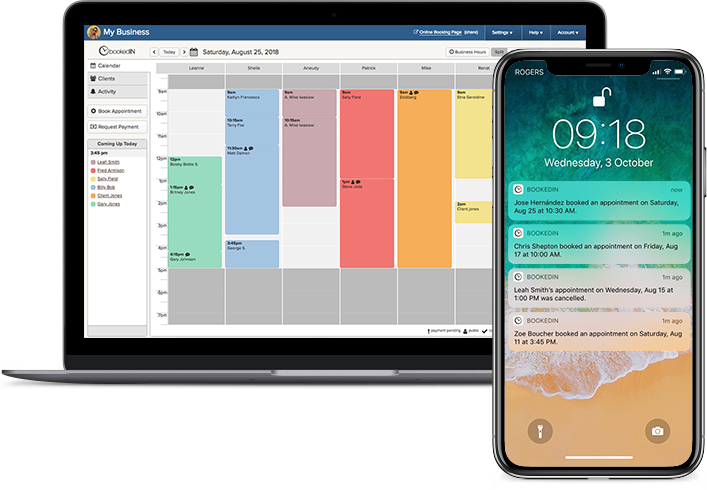
Bookedin is built to overcome all the chaos most tattoo artists deal with daily: constant DMs, flakey clients, double-booking, and clients who “didn’t know they had to leave a deposit.”
Instead of salon-style menus, you get a clean booking page that shows your services, artists, and availability in a way clients actually understand. The calendar is designed for long sessions, half-days, and full-day bookings, so you can block out real tattoo time instead of stacking tiny slots.
You can require deposits up front, which cuts down on no-shows and protects your income. Automatic reminders and client messaging keep clients in the loop without you typing the same message twenty times a week.
Bookedin also lets each artist manage their own schedule while keeping the shop view organized, so owners see the big picture without stepping on anyone’s toes.
2. Acuity Scheduling
Acuity Scheduling is known for being very flexible, but that flexibility can come with extra setup time.
It lets you build detailed service types, intake forms, and custom availability rules, which can be powerful for artists who like to control every detail. You can create consults, multi-hour sessions, and even different pricing tiers. It also supports deposits and prepayments, which helps protect your time.
The tradeoff is that the interface can feel busy, especially if you’re not into tweaking settings. Clients may also see more options than they really need, which can lead to confusion.
Acuity works best for studios that have someone willing to manage the system and keep everything organized, rather than artists who want to “set it and forget it.”
3. Square Appointments
Square Appointments is a solid option if you want booking and payments under one roof, and you already use Square for your POS. It offers a basic but clean online booking system that works well for solo artists or smaller shops that don’t need deep customization.
You get a calendar, client profiles, and simple reminders, plus the ability to take cards on-site with Square readers. For tattoo work, the main win is how easy it is to collect payments and tips, especially if you sell aftercare or merch.
The downside is that it’s still more “general service business” than tattoo-specific. You may need to bend your services list to fit its structure, and deposit options can feel limited compared to tools built around long, high-value sessions.
Nonetheless, if your priority is smooth payments and you run a simpler schedule, Square Appointments can work as a practical Vagaro alternative.
4. Fresha
Fresha offers free scheduling tools with a built-in marketplace that can help new clients discover your shop. On paper, that sounds great: online booking, reminders, and a client app without a monthly subscription.
For tattoo artists, the marketplace can bring extra visibility right away, especially in busy cities where there are way more competitors. That said, Fresha can be a useful Vagaro alternative. However, there are several tradeoffs.
You’ll likely pay commission fees on new clients booked through Fresha, and you have less control over how your brand appears next to other studios and salons.
Also, the system is still more beauty-focused, so you may need to simplify your services to fit their structure. If you’re trying to build a strong, independent brand and keep control over every client touchpoint, the marketplace model might feel limiting over time.
5. Calendly and other generic tools
Some tattoo artists try generic tools like Calendly, Google Calendar, or simple form builders to keep things cheap and light. These can work for very basic setups, like booking free consults or quick flash sessions.
Calendly is good at one thing: letting people pick a time from your availability. However, it doesn’t handle deposits, complex services, or multi-artist shops well. You’ll end up stitching together payment links, DMs, and manual reminders, which brings the chaos right back.
Google Calendar alone is even more limited; it’s fine for blocking time, but not for client self-booking.
Overall, these tools can be a temporary fix, but once your books fill up or you start taking larger pieces, you’ll feel the pain of not having a proper tattoo-focused booking system.
Quick Checklist for Choosing a Vagaro Alternative
- Can clients easily book the right service and artist from their phone?
- Does the system support long tattoo sessions, consultations, and personal time?
- Are deposits simple to set up, collect, and enforce?
- Does it send automatic reminders by text and email?
- Can each artist manage their own calendar without confusion?
- Is the booking page clean, branded, and free of salon clutter?
- Does it reduce DMs and back-and-forth, not add more?
- Is support responsive if something breaks on a busy day?
Commonly Asked Questions
What is the best Vagaro alternative for tattoo artists?
The best Vagaro alternative depends on your shop, but Bookedin is one of the strongest options built around tattoo workflows. It focuses on a clean booking page, long-session calendars, deposits, reminders, and client messaging instead of salon features you’ll never touch.
Square Appointments, Acuity, and Fresha can also work, but they’re more general-purpose and may require more compromises.
Why do tattoo artists switch away from Vagaro?
Some artists leave Vagaro because it feels too salon-focused. Service menus can get cluttered, clients book the wrong thing, and long tattoo sessions don’t always fit cleanly.
Artists also want simpler deposits, less feature overload, and booking flows that match custom work instead of quick beauty services. When software creates confusion or extra admin work, it’s usually time to switch.
Can I use generic tools like Calendly for tattoo bookings?
Yes, you can, but it's not the best way to go about things. Calendly and similar tools are fine for simple consults, but they don’t handle complex tattoo services, multi-artist calendars, or built-in deposits well.
You’ll end up juggling DMs, payment links, and manual reminders. Dedicated tattoo-friendly booking tools save time and reduce mistakes once your books start filling up.
How hard is it to switch from Vagaro to another system?
Switching takes some setup, but it’s manageable if you plan it. Export your client list, rebuild your key services, set up deposits and reminders, then run both systems in parallel for a short time if needed.
Most modern tools, including Bookedin, offer support to help you migrate. The short-term effort usually pays off in fewer no-shows and smoother days.