How To Handle Reschedules & Cancellations in Your Tattoo Studio
Tattoo studios deal with reschedules and late cancellations every day. Some clients get sick, some ghost, some push appointments over and over. If you don’t set limits, your shop’s schedule and revenue can turn into a mess.
This guide breaks down how tattoo studios should handle reschedules and cancellations while also keeping clients satisfied.
Key Takeaways
- Written policies help prevent arguments and protect your staff’s time.
- Deposits and clear deadlines reduce no-shows and flaky reschedules.
- Automated reminders cut down on last-minute cancellations.
- Online booking tools make rescheduling fast for clients and staff.
- Consistent enforcement keeps your calendar predictable and fair.
- Tracking repeat offenders protects your prime time slots.
Why Reschedules and Cancellations Hurt Your Studio
Every reschedule or cancellation hits more than just one empty chair. It breaks your flow, kills momentum, and often leaves a gap you can’t fill.
When clients move or cancel appointments at the last minute, you lose billable hours, your artists sit around, and your day gets chopped up into useless pieces. Multiply that by a few times a week, and you’re talking plenty of lost revenue in a single quarter.
It also messes with prep work. You’ve drawn a custom piece, set up references, maybe ordered special supplies, and then the client bails. That’s unpaid time.
When your policies are loose or unclear, people assume it’s fine to move things around whenever. The studios that handle this well use clear rules, deposits, and systems that make it easy for good clients to do the right thing.

Streamline your bookings
Join thousands of studios saving time with online scheduling.
Core Policies Every Tattoo Studio Needs
Studios that effectively handle reschedules and cancellations all have one thing in common: clear written policies. Not verbal. Not “it depends.” Written.
You need to spell out how far in advance clients can reschedule, what counts as a late cancellation, what happens to their deposit, and how many times they can move an appointment.
Keep it simple. For example: “48 hours’ notice to reschedule. Less than 48 hours is a cancellation and deposit is forfeited.” Post this on your booking page, website, social media, and in your confirmation messages.
Make sure every client sees it before they book. When policies are visible and consistent, arguments drop fast.
Your team also needs to follow the same rules. If one artist is strict and another is loose, clients will push boundaries. A short, firm policy protects everyone.
Using Deposits To Control Reschedules and Cancellations
Deposits are the backbone of how most tattoo studios handle reschedules and cancellations. A solid deposit system filters out flaky clients and protects your artists’ time.
The key is to make the rules around deposits simple and non-negotiable. Decide the amount (flat fee or percentage), when it’s due, and exactly when it’s refundable or transferable.
For example, you might allow one reschedule with the same deposit if they give 48 hours’ notice, but anything less counts as a cancellation and they lose it. Put this in writing and repeat it in every confirmation.
With Bookedin, you can collect deposits automatically when clients book online, so you’re not chasing payments or trusting verbal promises. When money is on the line, people take their appointments more seriously and think twice before casually moving or canceling.
Sign up & get a 14-day free trial
How Online Booking Software Simplifies Changes
Manual rescheduling is where chaos starts. Phone tags, DMs, half-read messages, and forgotten notes on paper all lead to double-booking and missed appointments.
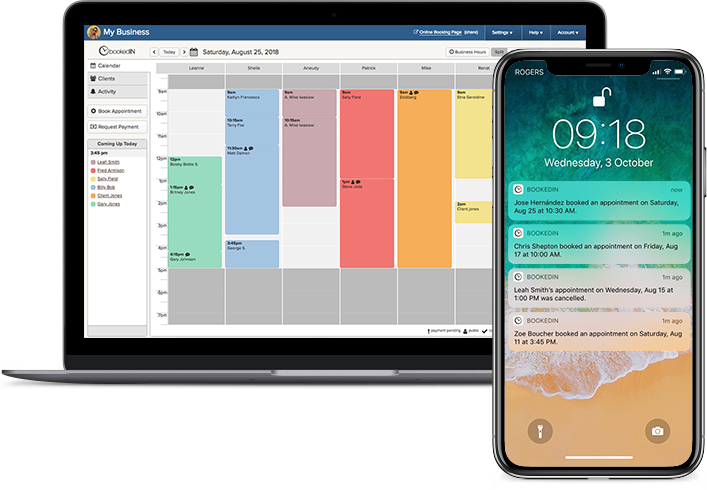
This is why many shops move to dedicated tattoo booking software to handle reschedules and cancellations. When you use Bookedin, your clients can use your booking page to reserve a new time slot, see real availability, and confirm without you juggling three calendars.
Your calendar updates instantly, and deposits, reminders, and client messaging all stay in sync. No one has to dig through Instagram messages to remember what time someone was supposed to come in.
You also get a clear history of changes, so if someone keeps moving their appointment, you can see the pattern and decide how to handle them. Less back-and-forth. Fewer mistakes. More control.
Reduce no shows and double booking
Simple online scheduling tuned for studios.
Setting Clear Time Windows for Reschedules
Studios that handle reschedules well use strict time windows. You decide how much notice you need to realistically fill a spot. For some, that’s 24 hours. For busy shops, it might be 72.
The rule is simple: If they reschedule before that window, their deposit moves with them. If they try to move inside that window, it’s treated as a cancellation, and they lose the deposit.
This keeps clients from casually shifting appointments the night before. Make the window obvious in your booking page, confirmation emails, and reminders.
With Bookedin, you can set cut-off times so clients can’t reschedule online inside your no-change window. That way, you’re not waking up to surprise changes at 2 a.m. Your team knows what to expect each day, and your calendar stays stable.
Book a free demo & see how it works
Handling Last-Minute Cancellations And No-Shows
Last-minute cancellations and no-shows are the most expensive problems. You’ve prepped, maybe turned away other clients, and then the chair stays empty.
The first line of defense is your deposit and time-window policy. If they cancel late or don’t show, you keep the deposit. No exceptions unless there’s a true emergency and you choose to make a one-time exception.
The second line is how you respond. Use client messaging to send a short, firm note: “You missed your appointment today at 2 p.m. As per our policy, your deposit is non-refundable. To book again, a new deposit is required.”
Keep it neutral. Don’t argue. Track repeat flakers in your notes. Some studios require full prepayment from those clients or refuse to book them again. Protect your prime time slots for people who show up.
When clients see you enforce your rules, they take future appointments more seriously.
Using Reminders To Prevent Unnecessary Changes
A lot of reschedules and cancellations happen because people simply forget. They booked weeks or months ago, and life got in the way. Automated reminders cut this down fast.
With Bookedin, you can send confirmation messages when they book, plus reminders by email or text before the appointment. Include the date, time, location, and a short line about your reschedule window.
For example: “Need to reschedule? Please do so at least 48 hours before your appointment to keep your deposit.” This gives clients a clear chance to adjust early instead of bailing last minute.
You can also send a reminder a week out for big pieces, then another 24–48 hours before. The goal is to keep the appointment top of the client’s mind as much as possible.
Stop losing time in your messages
Let clients pick a time and confirm instantly. Your schedule stays full and your inbox stays quiet.
- ✓Collect deposits seamlessly
- ✓Automatic reminders
- ✓Calendar sync
- ✓Mobile‑friendly booking
Managing Repeat Reschedulers and Problem Clients
Every studio has those clients who reschedule over and over. They’re not always rude. Sometimes they’re just disorganized. Still, they can make a mess of your calendar. That’s why it’s important to set limits.
Decide how many times someone can reschedule with the same deposit. Many studios allow one free reschedule with proper notice. After that, the deposit is forfeited and a new one is required.
Track this in your booking system’s client notes. If someone has three or four changes on record, you know what you’re dealing with. You can also block online booking for certain clients and require them to call the shop, so you can set stricter terms.
The goal isn’t to punish people. It’s to protect your time from patterns that cost you money.
Handling Reschedules & Cancellations: FAQ
How much notice should I require for reschedules?
Most tattoo studios use 24, 48, or 72 hours. If your schedule fills fast or you do large pieces, 48–72 hours gives you a better chance to refill the spot.
Whatever you choose, write it down, share it everywhere, and enforce it the same way for every client.
Should I allow clients to reschedule without losing their deposit?
Yes, but with limits. Many studios allow one reschedule with proper notice and keep the same deposit.
After that, the deposit is forfeited and a new one is required. This keeps good clients happy but stops people from endlessly moving their appointment.
How can I reduce last-minute cancellations?
Use deposits, clear time windows, and automated reminders. Send confirmations when they book, plus at least one reminder 24–48 hours before. Include your reschedule deadline in every message so clients know they need to act early if something changes.
How do I handle clients who keep moving their appointment?
Set a reschedule limit per deposit and stick to it. After one allowed reschedule with proper notice, require a new deposit. Track their history in your system.
For "chronic offenders," consider blocking online booking and only scheduling them with stricter terms or not at all.