Barbershop Deposit Policy Guide: How Much To Charge and When
Running a busy shop means constant decisions about time, money, and clients. That’s why it’s often good to have a clear barbershop deposit policy that’ll keep your chair full, your schedule tight, and your income predictable.
This guide breaks down how much to charge, when to require a deposit, and how to explain it so clients respect your time.
Why Your Barbershop Needs a Deposit Policy
No-shows and last-minute cancellations can be quite annoying as they mean lost income, wasted prep time, and empty chairs during your best hours.
A solid barbershop deposit policy is often the best solution to prevent these. When clients put money down, they’re far more likely to show up or at least give you enough notice to fill the spot.
A deposit also sends a clear message that your time is valuable. This is especially important for long services that block off big chunks of your day. With a clear policy, you stop arguing about “just this once” exceptions and start running your shop like a business.
And if you use a tool like a barbershop booking software, you can collect deposits automatically and tie them to your calendar so every slot is protected.
Also read: 8 Smart Ways To Boost Your Barbershop Revenue
How Much To Charge for Barbershop Deposits
The right deposit amount depends on your prices, your market, and how often clients flake. A common starting point is 20–50% of the service price. For quick cuts, you might keep it on the lower end. For long or specialty services, go higher.
Another approach is a flat fee. For example, $10–$20 for regular cuts and $30–$50 for big services.
Look at your average no-show rate and how much it costs you when someone doesn’t show. If you lose $300 a month to empty slots, a stronger deposit can fix that fast.
The key is balance: high enough to make clients commit, low enough that good clients don’t feel punished. Review your numbers every few months and adjust if you still see too many gaps in your calendar.
If you’re unsure, test one deposit amount for 30–60 days, track no-shows, then tweak. Clients will adapt quickly as long as you explain the policy clearly and stay consistent.
When To Require a Deposit (and When You Can Skip It)
You don’t need the same deposit rules for every situation. Focus on the appointments that’ll significantly hurt your revenue if they don’t push through. Require a mandatory deposit for long services like multi-service packages.
Do the same for peak hours (e.g., evenings, weekends, and holidays) when demand is high, and your chair is never empty.
You should also consider deposits for new clients, especially if you’ve had issues with first-timers not showing. The same goes for mobile services or house-call cuts, since travel time is a high cost.
For regulars who always show and tip well, you might relax the rules or only require deposits for big services.
Overall, the goal is to protect your most valuable time blocks, not nickel-and-dime every single client.
Reduce no-shows and double booking
Simple online scheduling tuned for busy shops.
How To Explain Your Deposit Policy to Clients
Clients accept rules when they’re simple, fair, and repeated often. Avoid long speeches. Use short, direct lines like:
“To book this service, we take a non-refundable deposit that goes toward your total.”
Another alternative would be:
“Deposits protect our time and keep the schedule running on time for everyone.”
Put this same message everywhere: your booking page, social media, shop door, and text replies. When someone asks why it’s there, don’t get defensive. Just repeat the policy calmly.
If you use a system like Bookedin, your deposit terms can show right on the booking page and in client messages, so you’re not explaining it from scratch every day. The more consistent you are, the less pushback you’ll get, and the faster clients will treat deposits as normal.
However, if a client refuses any deposit at all, that’s a red flag. It usually means they don’t respect your time, and you should probably let those people go. The right clients won’t argue about a reasonable policy.
Setting Refund, Cancellation, and Reschedule Rules
A deposit policy is useless without clear rules for refunds, cancellations, and reschedules. So, decide how much notice you need to keep your schedule full; 24 hours is common, but many busy barbers use 48 hours, especially for long services.
If a client cancels before that window, you can allow a free reschedule and move the deposit to the new time. However, if they cancel late or don’t show, you keep the deposit. Spell this out in one or two sentences:
“Cancel or reschedule at least 24 hours before your appointment to keep your deposit. Late cancels and no-shows forfeit the deposit.”
If you want, you can offer one “grace” reschedule per client, but track it. Tools like Bookedin make this easier by tying deposits to appointments in your calendar so you can see what’s paid and what’s lost.
Using Deposits To Reduce No-Shows And Chaos
Deposits work best when they’re part of a full system, not a random rule. Combine using deposits with automatic reminders, clear booking page info, and fast client messaging.
When a client books and they pay the deposit, they should get a confirmation and then receive reminders before the appointment. Each message repeats the key parts of your policy: time, location, and what happens if they cancel late.
This constant, automated communication cuts down on “I forgot” excuses and last-minute drama. It also saves you from manually texting all day.
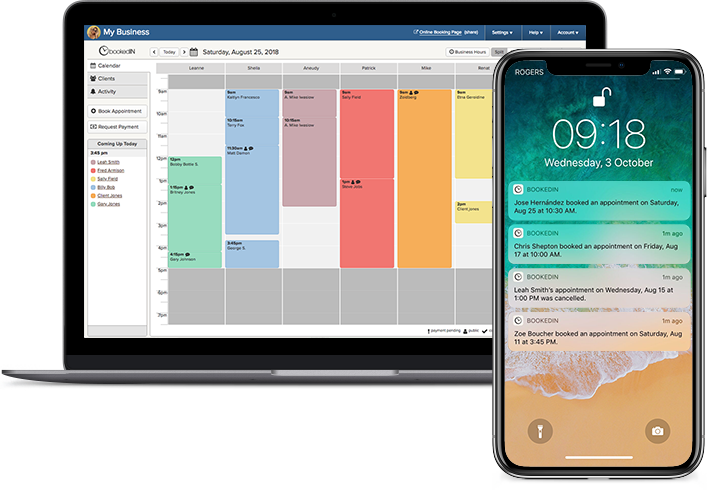
With Bookedin, for example, deposits, reminders, and client messaging all connect to your calendar, so you see your day at a glance: who’s booked, who’s paid, and who needs a follow-up.

Put scheduling & client info in one system
Join thousands of barbers saving time with online scheduling.
Handling Pushback From Clients and Special Situations
Some clients will push back, especially when you first roll out your deposit policy. Stay calm and repeat your rules. Use phrases like: “This policy is for everyone. It keeps the schedule fair and open for serious clients.”
If someone has a real emergency, you can choose to offer a one-time exception, but log it so it doesn’t become a habit.
For chronic reschedulers and late-cancellers, tighten the rules: require deposits for every visit or limit their booking options. If a client gets angry, don’t argue in your DMs. Point them to your posted policy and let them decide if they still want to book.
Your goal is not to keep every client. It’s to keep the right ones who respect your time and your rules.
Make it easy for clients to book
Let clients book a time and confirm instantly — no back-and-forth. Your schedule stays full, and you spend less time replying.
- ✓Collect deposits seamlessly
- ✓Automatic reminders
- ✓Calendar sync
- ✓Mobile‑friendly booking
How much should a barbershop deposit be?
Most barbers charge a deposit of 20–50% of the service price. Use the lower end for quick cuts and the higher end for long or premium services.
You can also use a flat fee, like $10–$20 for basic cuts andmore for big services.
The key is that it’s enough to make clients commit without scaring off good customers.
Should barbers charge deposits for every appointment?
No, you don’t have to. Many shops only require deposits for new clients, long services, and peak hours.
For trusted regulars and slow times, you can relax the rules.
Are barbershop deposits refundable?
That’s your choice, but most barbershops use non-refundable deposits that can be moved if the client reschedules within your notice window.
For example, cancel or reschedule 24 hours before, and you keep the deposit on file. Cancel late or no-show and the deposit is lost.
Whatever you choose, write it clearly and apply it the same way to everyone.
How do I tell clients about my new deposit policy?
Keep it short and repeat it everywhere. Post it on your booking page, social media, and shop door. Add it to your confirmation messages and reminders.
When clients ask, say something like: “We now require a deposit to book. It goes toward your total and protects our time.” Consistency matters more than long explanations.
Can I charge different deposits for different services?
Yes, and you should. Use lower deposits for quick cuts and higher deposits for long or complex services. You can also set special rules for group bookings or events.
Just make sure each service description clearly states the required deposit so clients know before they book.
About the Author

The Bookedin Team is made up of writers, marketers, and people who genuinely understand the day-to-day of running a service business. Our articles cover everything from scheduling and client management to marketing and business growth — because running a service business is no small feat.