Barber Booth Rent: How Much To Charge + Agreement Template
Thinking about renting out a chair in your barbershop? Before you do, there are a few things to figure out so the arrangement works for both you and the barber who’ll be renting.
This article covers how to work out your barber booth rent, how to structure it, and what your agreement should include. You’ll also find a free agreement template to help you save time on your first draft.
What Is Barber Booth Rent?
Barber booth rent (also called chair rental) is an arrangement where a barber pays the shop owner a flat fee to lease a chair and workstation inside the barbershop, instead of working as a paid employee or on commission.
The barber booth rent fee is usually paid weekly or monthly, and the amount stays the same no matter how many clients the barber gets.
In exchange, the renter typically keeps what they earn from their services. And depending on the terms you agree on, they may bring their own clients, set their own prices and hours, and handle their own supplies, taxes, and scheduling.
Overall, with this arrangement, your role as the shop owner is closer to a landlord’s than an employer’s. You provide the space, and the renter runs their own small business out of it.
Is Booth Rental the Right Setup for Your Shop?
Booth rental suits some shops better than others. Sure, it can take some work off your plate, but it also changes how much say you have over your shop
Below are the main pros and cons to help you decide, plus what to know if you’re considering a mix of renters and employees.
Pros of barbershop booth rental
Here are the advantages of renting out a chair or booth at your barbershop:
- Predictable income: Rent comes in at the same amount whether a renter has a packed week or a slow one, so you can plan around shop expenses with more certainty.
- Less payroll and admin work: Renters run their own business, so depending on the rules where you’re located, you likely won’t handle their wages, payroll taxes, or employee benefits.
- More time for running the shop: Renters manage their own clients and schedules, which frees you up to focus on everything else.
- Access to a ready client base: Experienced barbers often bring their regulars with them. That could mean more foot traffic and possibly new clients for the rest of your team.
Cons of barbershop booth rental
As the barbershop owner, you’ll have less say in how the renter runs their chair. So, here are some of the tradeoffs to consider:
- Less control over how renters work: Renters generally set their own hours, prices, and services, and sometimes pick their own products. You can set house rules in your agreement, such as cleanliness standards, conduct, and how shared areas are used. However, you usually can’t direct how they do their work.
- A less consistent client experience: Clients might run into different prices, policies, and ways to schedule depending on which barber they visit.
- Capped earnings per chair: If a renter’s schedule fills up and they start earning more, your income from that chair stays the same until you raise their rent.
- Risk of losing clients: When an agreement ends, a renter’s regulars may follow them to their next shop. That makes the notice period in your agreement especially important.
Client scheduling app that does the heavy lifting for you
With features like staff calendars, automated follow-ups and reminders, and custom availability.
Can you have both booth renters & employed barbers?
Yes, you can. In fact, some barbershops run both setups. For example, a shop might keep a few employed barbers to handle walk-ins and the house service menu, then rent one chair to an experienced barber with an established following.
This mix can work well when you want steady rent from a chair or two while still keeping a team that delivers your shop’s usual experience.
Just make sure to keep a clear line between renters and employed barbers. Renters should have their own clients, prices, and schedules, while employed barbers follow your shop’s hours and policies.
For instance, if you start setting renters’ hours or assigning them walk-ins, they may be treated as your employees under local rules. That could mean you’d owe things like payroll taxes, even if your agreement says they’re renters.
Figuring Out How Much To Charge for Barber Booth Rent
There’s no single right price or range for a barber booth rental, since costs and demand widely vary from one shop to the next.
The steps below will help you work out a number based on your own costs, what renters can realistically pay, and what other shops in your area charge.
1. Start with what each chair costs you to run
Your first step is finding the minimum you need to charge per chair just to break even. To do that, add up your shop’s monthly running costs, such as:
- Rent or mortgage payments for the space
- Utilities, internet, and phone
- Business insurance
- Shared supplies, towels, and laundry
- Cleaning, repairs, and equipment upkeep
- Software and subscriptions (like your client scheduling software or music streaming)
- Shop licenses and permits, divided by month
Then, divide the total by the number of chairs in your shop. The result is what each chair costs you every month.
Make sure to count every chair, including the one you work from (if you’re also working as a barber ) and any used by employed barbers. Otherwise, your renters end up covering the cost of stations they don’t use.
2. Add the profit you want from each chair
The break-even number only covers your costs. To make renting out chairs worth your while, you’ll need to add an amount on top for profit.
How much you add depends on your goals, but it helps to factor in a few things:
- The time you’ll spend managing renters, collecting rent, and handling issues
- Wear and tear on chairs, stations, and shared areas
- Months when a chair might sit empty between renters
Building a little extra into your price for these makes it less likely that one slow month will cut into your own income.
3. Run the numbers from the renter’s side
Your price also has to work for the barber paying it. If renters can’t earn a decent living at your rate, you’ll likely have a hard time finding someone to take the chair or keeping them for long.
To check, estimate what a typical renter might bring in each week by multiplying their number of clients by their average service price. Then, subtract what they’d likely pay out of pocket such as:
- Your booth rent
- Their own tools, products, and supplies
- Card processing fees
- Their own insurance and licenses
- Taxes, since they’re self-employed
The amount left over should give a barber a good reason to rent from you, whether that’s earning more than they do now or getting more out of the setup.
4. Check what shops near you charge
Next, look at what other barbershops in your area charge for a chair. You can find rates on local listings, rental sites for beauty pros, and community social media groups, or by asking barbers you know.
As you compare, pay attention to what each shop includes for the price. A shop with a front desk, towels, and products included can reasonably charge more than one that only offers a chair and a mirror.
Location, foot traffic, and the shop’s reputation also affect how much barber renters would be willing to pay.
If your number comes out much higher than nearby shops, be ready to show renters what they’re getting for the extra cost. If it’s much lower, double-check your math, since you may be charging less than your chair is worth.
5. Factor in what’s included in the rent
What you include in the rent affects both your costs and how much renters are willing to pay. Common extras include:
- Utilities and Wi-Fi
- Towels, capes, and laundry service
- Back-bar products like shampoo, styling products, and disinfectant
- Front desk or reception help
- Storage space or a locker
- Booking software
- A spot on the shop’s website and social media pages
Since each extra adds to what you spend, include its cost in your math and price it into the rent. Then, spell out exactly what’s included in your barber booth rental agreement, so there’s no confusion later about who supplies what.
How To Structure Your Barber Booth Rent
Besides the price itself, you’ll need to decide when rent is due, whether every chair costs the same, and what happens when a payment comes in late. Having these details sorted from the start can save you from possible disputes with renters later.
Weekly vs. monthly rent
Both options can work well, depending on who’s renting the chair.
- Weekly rent: Smaller, more frequent payments tend to be easier for renters to manage, especially newer barbers whose income changes from week to week. You’ll also find out quickly if a renter missed a payment.
- Monthly rent: Fewer payments to track works well for established renters with steady income. However, a bigger lump sum can be harder for some renters to cover, and you might not immediately notice a missed payment.
Whichever you choose, make sure your booth rental agreement contains a fixed due date (such as every Monday or every 1st of the month) and a payment method (like bank transfer or a payment app).
Flat rates vs. tiered rates
A flat rate means every chair costs the same. It’s simple to manage and easy for renters to understand.
With tiered rates, the price changes based on a few factors, such as:
- Station location: A chair by the front window might have a higher rental fee than one in the back corner.
- Days per week: Part-time renters who only work a few days a week could pay less than full-time renters.
- What’s included: A basic chair could cost less than one that comes with products, laundry, and front-desk help.
Tiered rates can help you fill chairs that are harder to rent. These also make your shop more appealing to part-time barbers, since they won’t have to pay full-time rent for the few days they’re in.
Intro rates for new renters
A lower rate for the first few weeks or months can help newer barbers can help newer barbers cover rent while they build a client base. Plus, it can help you find and sign a renter faster.
If you choose to offer one, set a clear end date and the full rate the renter will move to afterward, then put both in the barber booth rental agreement.
Lastly, keep in mind that you don’t need to offer an intro rate to everyone. Experienced renters with steady clients can typically afford the full rate from the start.
Security deposits & rules on late payment
A security deposit is a one-time payment renters make before they start, such as one week’s or one month’s rent. It covers you if a renter leaves with unpaid rent or damages shop equipment.
In your agreement, spell out what the deposit can be used for and when renters get it back.
You also have to set clear rules for when rent comes in late, including:
- A grace period, such as two or three days after the due date
- A late fee that applies once the grace period ends
- What happens after repeated late payments, such as the right to end the agreement
Some places have rules on deposits and late payments, so check beforehand what applies in your area.
When & how to raise rent
Your costs will likely go up over time, so it helps to plan for rent increases from the start. Below are some tips to take note of.
- Review your rent once a year, such as when agreements come up for renewal.
- Give written notice well ahead of time (like 30 or 60 days), and state that notice period in your agreement.
- Explain the reason, whether it’s higher space rent, new equipment, or added perks. Renters may find an increase easier to accept when they know what’s behind it.
- Raise rent in smaller steps instead of one big jump, which can push renters to look elsewhere.
Once you’ve settled these details, you’ll want them in a written agreement that you and each renter sign.
What To Include in a Barber Booth Rental Agreement
A booth rental agreement puts the terms you and your renter have agreed on in writing, so you both know where you stand if questions or disagreements come up later.
Below are the main sections every barber booth rental agreement should include.
- The space and the length of the agreement: Name both parties, the shop’s address, and the station the renter will use. Include the start date and whether the agreement runs for a set term (such as six or 12 months) or continues week to week or month to month until one side ends it.
- Rent, payment dates, and late fees: As covered in the previous section, write down the rent amount, how often it’s due, and how renters should pay. Add the grace period, late fee, security deposit amount, and when the deposit gets returned.
- What’s included and what renters bring: List what the rent covers, such as utilities, Wi-Fi, towels, laundry, or back-bar products. Then, list what renters supply on their own, like tools and retail products.
- Hours and access to the shop: State when the shop is open, whether renters can come in outside those hours, and how (such as with their own key or access code).
- House rules for shared spaces: Cover cleanliness and sanitation standards, how shared areas like the waiting area and wash stations are used, music volume, and general conduct.
- Licenses and insurance: Require renters to hold a valid barber license and any permits needed where you’re located, and keep copies on file. You may also want renters to carry their own liability insurance, which can cover them (and help protect you) if a client is injured or files a complaint.
- Clients, pricing, and marketing: State that renters set their own prices and manage their own clients. Spell out who keeps client contact details and records when a renter leaves, and whether renters can use the shop’s name, logo, or social media pages in their own marketing.
- Ending the agreement: Include how much notice each side needs to give, how final rent and the deposit return are handled, and when the renter must clear out their station. Also, list the reasons you could end the agreement early, such as repeated late payments or breaking house rules.
Note: This list is a starting point, not legal advice. Rules differ by location, so have a local lawyer review your agreement before you and your renter sign it.
Barber Booth Rental Agreement Template
Below is a booth rental agreement template you can download for free.
Each section has blanks for your shop’s details, so you won’t have to write the agreement from scratch. Just remove or adjust any sections that don’t apply to your shop.
Get a copy of this template for a barber booth rental agreement
Keep Every Barber’s Calendar in Order With Bookedin
Your barbershop booth rent is set to cover your costs, but your renters’ income is what actually pays it.
When a renter consistently has a steady stream of clients who show up as planned, rent is more likely to come in on time. Not to mention, renewing the agreement (when the time comes) becomes an easier decision for both of you.
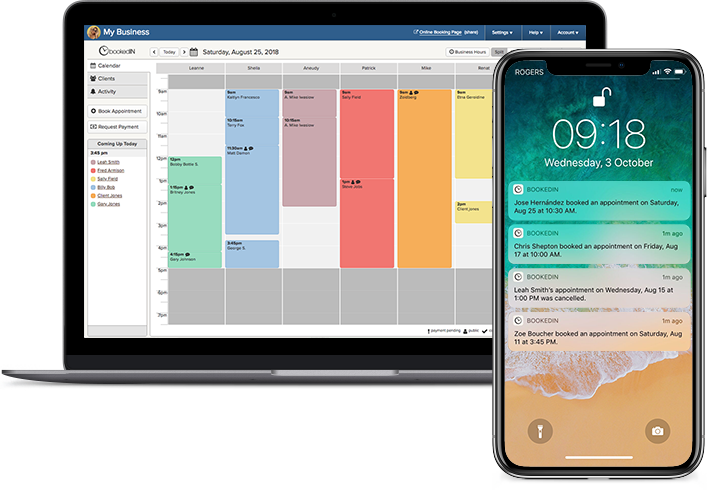
That makes your renters’ schedules worth keeping an eye on, even though they manage their own. With Bookedin, every barber gets their own calendar in one shop account, so clients can find them in one place and schedule a visit anytime.

Easiest way to manage appointments
Everything you need to run your barbershop's schedule in one place.
- ✓ Take deposits
- ✓ Automatic reminders
- ✓ Calendar sync
- ✓ Mobile-friendly booking
About the Author

With over a decade of experience across startups, online publications, and agencies, Marcy is all about delivering content that connects brands with the audiences they're trying to reach.