How To Start a Barbershop: A Step-by-Step Guide
Opening your own barbershop takes a lot more than just finding an empty space and putting up a sign. There are a lot of things to plan, budget for, and sign off on way before your first client comes in.
Whether you’re a barber ready to run your own place or a business owner who wants to open one, this guide covers how to start a barbershop in 12 steps (and in the order things usually need to happen).
Key Takeaways
- Research nearby barbershops first, since what you learn will shape your prices, location, and target clients.
- Decide early whether you’ll take walk-ins, appointments, or both, and how you’ll pay your barbers. This will affect your layout, budget, and hiring.
- Licensing rules vary by location, so contact your local licensing board before you sign a lease or start renovating.
- List every startup and monthly cost, and set aside enough money to cover a few months of expenses.
- Price services based on what they cost you to provide, and try not to go too low just to compete.
- Set up online booking, payments, and shop policies before your barbershop opens.
- Start taking client bookings a few weeks early and hold a soft launch to catch problems before your grand opening.
Step 1: Research the Barbershop Scene in Your Area
What you learn here will shape almost every decision that follows, from what you charge to where you open and who you hire.
Doing this market research doesn’t have to be a formal project, either. Below is how to approach your research, in three parts:
Scope out the competition
First, make a list of barbershops near the area where you’d like to open. Google Maps is an easy place to start, since you can see every shop nearby along with their hours, photos, and reviews.
For each shop, note their services, prices, opening hours, and whether they take walk-ins, appointments, or both.
Also, if you have the time and resources, get a haircut at a few of them. Sitting in the chair shows you things a website won’t, like how long you waited and how the barber greeted you.
Pay attention to the details you liked and the ones that annoyed you, because your own clients in the future will probably notice the same things.
Reviews are worth reading closely too, especially the very good and very bad ones. Look for patterns (rather than one-off complaints), since those will point to problems you could solve in your own shop.
Keep everything in a simple spreadsheet or notes app so you can compare shops side by side.
Look for gaps you can fill
Once you have a clear picture of what’s already out there, you should go find gaps; that is, something that barbershop clients in your area want but can’t easily get from the shops already present.
After all, you want to give people a specific reason to choose your barbershop over, say, the one they’ve been going to for years.
Here are a few examples of what a gap might look like:
- Every shop nearby closes at 6:00 PM on weekdays, even though the area is full of office workers who can’t clock off until 5:00 PM.
- None of the local shops offer hot towel shaves or detailed beard work.
- Every shop is walk-in only, and clients regularly leave because the wait is too long.
However, keep in mind that a gap sometimes exists for a reason, like there just isn’t enough demand for that service in your area.
Pick the type of clients you want to attract
Your target clients might be college students looking for a quick yet affordable cut, corporate workers looking for a high-end, full-service experience, or any other group that fits your vision for the shop.
Of course, choosing your target clients doesn’t mean you’ll be turning anyone else away.
It just gives you a specific group to keep in mind when you’re deciding on matters like your shop hours, prices, the overall feel of your shop, and the barbers you’ll hire.
Step 2: Decide How Your Barbershop Will Run
Once your research is done, you’ll need to make a few decisions about how your barbershop will operate. Make sure to think them through carefully before you start shelling out money because changing these decisions later can be hard.
Plan whether you’ll take walk-ins, appointments, or both
Walk-ins are the classic barbershop model, where clients show up and wait their turn. They’re great for catching people passing by, but it’s hard to know how busy you’ll be from one day to the next.
Appointments give you a more predictable day, since you know who’s coming in and when. These make it easier to schedule your barbers and keep wait times short.
The tradeoff is that you might miss out on clients who want a cut on the spot. Plus, no-shows and last-minute cancellations can cost you money, since time slots may be hard to fill on short notice.
Many shops do a mix of both, like taking appointments on weekdays and keeping Saturday mornings walk-in only. If you opt for this, post clear rules on your door, website, and social media so clients know what to expect.

Appointment scheduling made 10x easier
See how the right booking software can save you a lot of time as your barbershop gets off the ground.
Pick a pay model for your barbers
How you pay your barbers affects your income, your monthly costs, and how much say you have over the way your shop runs. Most barbershops use one of three models, or a mix of them.
- Booth or chair rent: Each barber pays you a fixed weekly or monthly fee, and they keep what they earn from their clients, so you get predictable income and less admin to handle. They might count as contractors (not your employees), depending on your local labor rules.
- Commission: Your barbers earn a percentage of the price of every service they perform, and the shop keeps the rest. Your income grows when the shop is busy, and you have more say over prices, services, and schedules.
- Hourly or salaried: Your barbers earn steady pay regardless of how many clients they see. This model gives you the most control over how your shop runs, and it can appeal to newer barbers who want a stable income while they build their skills.
The right pay model depends on your budget and how hands-on you want to be. If you’re on a tight budget and want predictable income from day one, booth rent may lower your risk.
Or if you want every client to get the same experience no matter which barber they see, commission or wages might be the way to go, since these let you set the prices, services, and standards across your whole barbershop.
Choose your shop’s style & main services
Your barbershop’s overall concept ties all of your earlier decisions together. Most barbershops fall into one of these general types:
- Classic barbershop: traditional decor, straight razor shaves, hot towels, and quick cuts with plenty of conversation
- Upscale grooming lounge: longer appointments, premium products, complimentary drinks, and higher prices
- Neighborhood family shop: kids’ cuts, fast service, affordable prices, and strong weekend hours
As previously mentioned, your concept should match your target clients (which you’ve defined in Step 1).
Your concept also guides plenty of practical choices. It influences your decor and music choices, the products you stock, the services on your menu, and how much time you set aside for each client.
Step 3: Write Your Barbershop Business Plan
Here, you’ll put in one place everything you’ve decided on so far. It also forces you to think through the parts you haven’t figured out yet, like how many clients you’ll need to bring in each week to cover rent.
Also, if you’re applying for a loan, bringing on a partner, or pitching yourself to a landlord, they may ask to see a formal business plan first.
Most barbershop business plans cover the same core sections. These include an overview of your concept and target clients, your market research, your services and pricing, and your marketing approach.
You’ll also want to include your operations (location, staffing, and equipment) and your financials, meaning your startup costs, monthly expenses, and how much revenue you expect to bring in.
Also read: How To Write a Barbershop Business Plan (With Template & Examples)
Step 4: Register Your Business & Get Licensed
Registration and licensing rules for barbershops vary a lot depending on your country, state or province, and city.
The parts below cover what most new shop owners will need to look into. Make sure to check with your local barber licensing board and government business office for the exact requirements where you plan to open.
Choose a business structure
This will determine how you pay taxes, how much paperwork you’ll deal with, and whether your personal assets are protected if the business runs into debt.
Business structures go by different names and follow different rules depending on the country, but most fall into a few general types.
The simplest option is running the barbershop under your own name as a sole owner. Setup is usually quick and inexpensive, but you’re personally responsible for any business debts. That means your personal savings or property could be at risk if the shop can’t pay its bills.
Another option is forming a separate legal entity, like a limited liability company in the U.S. or a limited company in the U.K. Forming an entity like this typically involves more paperwork and fees, but it keeps your personal finances separate from the business.
If you’re opening the shop with someone else, a partnership or shared company is another common route. In that case, put a written agreement in place that covers who owns what, who makes which decisions, and what happens if one of you wants to leave.
Since tax rules vary so much from place to place, you should talk to an accountant or business lawyer before you decide. They can tell you which structure makes the most sense for your barbershop and your plans to grow.
Register your barbershop name
Before you commit to a name, make sure another business in your area isn’t already using it.
Search your local business registry, look for existing trademarks, and check if the website domain and social media handles are available.
Ideally, your barbershop name should be the same everywhere, so clients searching on Instagram or Google can tell they’ve found the right shop.
Once you’ve confirmed no one else has that barbershop name, register it with your local business registry. Remember to choose carefully, because changing the name later can be a huge hassle.
Apply for your barber & shop licenses
Most places have two layers of licensing for barbershops: one for the barbers and one for the shop itself.
On the barber side, most places require anyone cutting hair to hold a valid barber license. Getting licensed usually involves finishing barber school, an apprenticeship, or both, and then passing an exam.
If you’re hiring barbers, confirm that each one has a current license before their first day and keep a copy on file.
Many places also require the barbershop itself to be licensed or registered. The shop usually has to pass an inspection before it can open, and inspectors may check your sanitation setup, equipment, plumbing, and the amount of space at each station.
Depending on where you are, you may also need a general business license, a zoning or occupancy permit, and a permit for your exterior sign.
Now, whether you need to be a licensed barber yourself to own a shop depends on where you are. Some places allow non-barbers to own a barbershop as long as a licensed barber or licensed manager oversees it.
Make sure to contact your licensing board early to learn all the requirements, ideally before you sign a lease or start renovating.
Get business insurance
Insurance protects your barbershop from costs that could otherwise put you out of business. Here are the most common types of coverage for barbershops:
- General liability insurance: covers injuries to clients or visitors on your property, like someone slipping on a wet floor
- Professional liability insurance: covers claims related to your services, like a client getting cut during a straight razor shave
- Property insurance: covers your equipment, furniture, and supplies if they’re damaged or stolen
- Workers’ compensation or employer’s liability insurance: covers employees who get hurt on the job, and is required in many places once you have staff
Your landlord may also ask for proof of liability insurance before handing over the keys, so sort out coverage before your lease starts.
Some insurers offer packages built for salons and barbershops, which can be easier than buying each policy separately.
Open a bank account for your barbershop
Keeping your business money separate from your personal money makes bookkeeping and taxes much easier. You’ll be able to see exactly what the shop is earning and spending, and you’ll have clean records if you ever apply for a loan.
Depending on your business structure, keeping your accounts separate may also be important for protecting your personal assets.
Most banks will ask for your business registration documents, so most likely, you’ll only be able to open an account after your business is officially registered.
Once the account is set up, connect it to your payment processor so that money from client payments lands directly in your business account.
Step 5: Figure Out Your Startup Costs & Funding
Every barbershop’s startup costs look different. Your total will depend on where you’re opening, how big the shop is, how much work the space needs, and whether you’re buying new or used equipment.
So instead of chasing a single number, build a list of every cost you can expect, get real quotes for each one, and add them up. That list will show you how much funding you need and help you spot where you can save.
Below are the costs to plan for, how to fund them, and why you’ll want some money set aside after opening.
One-time startup costs
These are what you’ll pay before you open your doors. Most new barbershops can expect these categories:
- Lease deposit and first month’s rent: most landlords ask for a security deposit plus rent upfront before you get the keys
- Renovations and build-out: plumbing, electrical work, flooring, lighting, and paint to turn an empty space into a working barbershop
- Barber chairs and stations: chairs, mirrors, and station storage for each barber
- Tools and equipment: clippers, trimmers, shears, razors, sterilizers, and a hot towel cabinet if you’re offering shaves
- Licensing and registration fees: business registration, shop license, inspection fees, and any permits
- Signage and branding: your exterior sign, logo design, and any printed materials
- Initial inventory: retail products to sell, plus supplies like neck strips, capes, towels, and disinfectant
- Front desk and waiting area: seating, a checkout counter, and a card reader
Renovation costs tend to vary the most, so get quotes from contractors before you commit to a space. A location that needs new plumbing or electrical work can cost far more to set up than one that was previously a salon or barbershop.
Ongoing monthly costs
Your monthly costs are what it takes to keep the barbershop running once it’s open. Rent is usually the biggest one, followed by what you pay your barbers if they earn commission or wages.
You’ll also have utilities, insurance premiums, software subscriptions, supplies, card processing fees, marketing, and loan payments if you borrowed money to open.
Add up your monthly costs to figure out your break-even point, meaning how much revenue you need each month just to cover expenses. Then work backward to the number of clients you’d need to see each week to hit it.
If that number looks unrealistic for the space and team you’re planning, it’s better to find out now and adjust before you sign anything.
Ways to fund your barbershop
Many barbershop owners combine a few funding sources instead of relying on just one. Here are the most common options:
- Personal savings: you won’t owe anyone or pay interest, but you’ll have less of a safety net
- Business loans: available from banks, credit unions, and government-backed small business programs in many countries, though approval can take a while
- Lines of credit: let you borrow up to a set limit and pay interest only on what you use
- Partners or investors: can cover a large share of your costs in exchange for part of the ownership
- Friends and family: often more flexible than a bank, but put the terms in writing
Whichever option/s you go with, have your documents ready before you apply. Most lenders will ask for your business plan, bank statements, registration documents, and a breakdown of your startup costs.
Build a cash cushion
New barbershops rarely start out fully booked. Even if you’re bringing clients with you from a previous barbering job, it can take a while to fill every chair, especially if you’re hiring barbers who are building their own client lists.
So, set aside enough money to cover several months of operating costs on top of your startup costs. The exact amount depends on your expenses and how quickly you expect business to pick up.
A cash cushion also covers surprises like a failed inspection that needs fixing, a delayed opening date, or equipment that breaks in the first month.
And since rent is likely your biggest ongoing cost, the location you choose will have a big effect on how far your cushion goes.
Step 6: Find the Right Location for Your Barbershop
Your location affects who walks past your shop, how easy it is for clients to visit, and how much you’ll pay every month.
It’s best to take your time deciding, since moving later can be expensive and disruptive. Visit any space you’re considering on different days and at different times to see what the area is really like.
Below are the four things to check before you commit to a location.
- Visibility and foot traffic: A space on a busy street matters especially if you’re taking walk-ins. Bonus points if it’s near gyms, cafes, or transit stations that local workers and residents visit often, since they could become regulars.
- Parking and accessibility: Check whether there’s enough affordable parking during your busiest hours. In cities where most people walk or take transit, being near a bus or train stop is more ideal. Make sure the entrance is easy for everyone to use and meets local accessibility rules.
- Space, plumbing, and layout: Look for existing plumbing if you’re offering shampoos or hot towel shaves, since adding it can be expensive. Also, check if there are enough outlets and room for your stations, waiting area, and storage.
- Lease terms and zoning: Confirm with your local government that the space is zoned for a barbershop before you sign. Then, check the lease length, renewal options, rent increases, and who pays for renovations. You can also ask for reduced rent during the build-out.
Step 7: Build Out & Equip Your Barbershop
Now, you can turn an empty space into a working barbershop.
As previously mentioned, your licensing board may have rules about sanitation, plumbing, and space per station. Keep those requirements on hand while you plan, so your shop passes inspection the first time.
Below are the things you need to set up.
Your floor layout
Sketch out where each part of the shop will go before you buy anything. Most barbershops need barber stations, a waiting area, a front desk or checkout counter, a shampoo area if you’re offering washes, and storage for supplies and towels.
Give each barber enough room to move around the chair and keep their tools within reach. Leave a clear path from the door to the front desk and waiting area, so clients aren’t walking through someone’s workspace.
Also, think about the clients who’ll be waiting. A spot near the window with a view of the street can make the wait feel shorter, and it shows passersby that your shop is busy.
Barber chairs & stations
Your barber chairs will be one of your biggest equipment costs, and your barbers will use those all day. Look for hydraulic chairs that adjust in height and recline for shaves, with sturdy, easy-to-clean upholstery.
Buying used chairs from a shop that’s closing or upgrading can cut costs, but you should check the hydraulics and upholstery before you commit.
Each station also needs a large mirror, good lighting, storage for tools, and enough outlets for clippers, trimmers, and a blow dryer. Plan for those outlets during the build-out rather than relying on extension cords and power strips later.
Tools & equipment
Most barbers bring their own clippers and shears, but your shop will still need a basic supply of equipment. Here’s a starter list:
- Clippers and trimmers (plus spares, in case a barber’s tool breaks mid-shift)
- Shears, razors, and combs
- Capes and neck strips
- Blow dryers
- A hot towel cabinet, if you’re offering shaves
- Towels, with enough to get through a busy day
- Spray bottles, brushes, and styling products
If your barbers are booth renters, they’ll probably supply most of their own tools. With commission or hourly barbers, you’ll have to cover more of it yourself.
Sanitation setup
A clean shop keeps your clients safe and your reputation intact, and it’s something inspectors will look at closely.
Put in place a system for disinfecting combs, clippers, and razors between clients, using a disinfectant that meets your local health rules. You’ll also need separate storage for clean and used towels, a handwashing sink, and covered trash bins.
Set clear cleaning rules for your barbers from the start, like disinfecting tools, wiping down the chair, and using a fresh neck strip between every client. Setting these routines when the shop is new is far easier than trying to change them later.
Front desk & waiting area
The front desk is where clients check in and pay, so keep it close to the entrance and clear of clutter. You’ll need a card reader or another way to take payments, plus a spot for a computer or tablet to check the day’s schedule.
For the waiting area, comfortable seating and a few small touches can go a long way, like water, phone chargers, or something on the TV.
If you plan to sell hair and beard products, display them near the front desk or waiting area, where clients have time to look.
Step 8: Create Your Service Menu & Set Your Prices
Your service menu tells potential clients what you offer and how much it costs. They’ll also use it to judge whether your shop is the right fit for them.
Here’s how to put together a service menu that works for your shop and your target clients:
Your core services
Most barbershops build their service menu around a handful of core services, like haircuts, fades, beard trims, line-ups, shaves, and kids’ cuts.
Focus on the services that your target clients are most likely to look for and that your shop is set up to handle from the start. You can always add more once you see what’s popular.
A shorter service menu is also easier for clients to read and for your barbers to deliver consistently. If you list 25 services on day one, some of them may rarely get booked, and clients may struggle to figure out what to choose.
Pricing your services
Figure out how much each service costs you to provide. Factor in how long it takes, your barber’s pay, supplies, and a share of your monthly expenses like rent and utilities.
That gives you the minimum price you need to charge to avoid losing money on each client. From there, look at what nearby shops charge for similar services (which you’ll have from the research you did in Step 1).
Then, adjust based on your concept. For example, an upscale grooming lounge with longer appointments can definitely charge more than a quick, affordable neighborhood shop.
You might also be tempted to set your prices low to stand out from nearby shops, but try to avoid going too low. Although that might help bring lots of clients in at first, it’ll likely be harder to raise your prices later.
Once you’ve set your prices, list how long each service takes along with the price. That way, clients know what to expect and each appointment gets the right amount of time on the schedule.
Extras & upgrades
Offering a few extras gives clients more ways to treat themselves and gives your shop a way to earn more from each visit.
Popular options include hot towel treatments, scalp massages, beard conditioning, eyebrow trims, and hair washes. You can also sell hair and beard products at checkout, especially if your barbers recommend products they actually use during the cut.
Step 9: Set Up Booking, Payments, & Shop Policies
Before opening day, sort out how clients will reserve a spot, how they’ll pay, and what happens if their plans change.
Having these systems in place early means fewer awkward conversations at the front desk once the shop gets busy. Here’s what to sort out for each of the three areas.
Online booking system
If you’re taking appointments, it’s best to have an online booking page so your clients can reserve a spot any time, even while you and your barbers are busy or the shop is closed.
With this, clients can see available time slots, choose a service and barber, and get a confirmation — all without having to call or message you. That saves you and your staff a lot of time and energy as well.
Look for a client booking tool that also lets you send automated confirmations and reminders before each appointment so your clients don’t forget.
It’s also helpful if the tool stores your client notes and booking history in one place. That way, any barber can see what a client got last time and any preferences they’ve mentioned.
The client scheduling app that does the heavy lifting for you
With features like automated follow-ups & reminders, client notes, payment collection, & more.
Payment options
Most clients expect to pay by card or phone, so you’ll need a card reader at the front desk at the very least. Some shops also take payment online when clients reserve, which speeds up checkout and can cut down on no-shows.
Look at processing fees, how quickly money reaches your bank account, and whether your payment system works with your booking software.
Keeping booking and payments connected means fewer things to track by hand at the end of each day.
Your barbershop’s policies
Shop policies tell clients what to expect if they cancel, show up late, or don’t show up at all. Here are the main ones to cover:
- Cancellation: how much notice clients need to give, and what happens if they cancel late
- Late arrivals: how late a client can be before you shorten the service or ask them to reschedule
- No-shows: whether you charge a fee, keep a deposit, or require payment upfront for clients who’ve done this more than once
- Deposits: which services, if any, require a deposit or full payment when clients reserve
- Walk-ins: if you’re running a hybrid shop, when walk-ins are welcome and how the wait works
Setting policies before you open is much easier than adding them later, when regular clients are used to doing things a certain way.
Step 10: Hire Your Barbers
If you’re planning to bring on other barbers (whether as employees or booth renters), it’s worth taking your time with this step.
After all, your barbers shape the client experience as much as your location or decor, and many clients will come back for a specific barber. Hiring well from the start can save you from turnover, inconsistent cuts, and unhappy clients down the road.
Where to find barbers for your shop
Start with your own network. Barbers you’ve worked with before, or those whom your contacts recommend, are often the easiest hires since you already have a sense of their skills and work habits.
Local barber schools are another good source, especially if you’re open to training newer barbers.
Instagram and TikTok can also help, since many barbers post their work there. Search local hashtags to find barbers in your area, and post on your shop’s account that you’re hiring.
Job boards and local barber community groups on social media can help you reach even more candidates.
What to look for when hiring
Skill comes first, so look at each barber’s portfolio and ask them to do a test cut if possible. Watching them work shows you their technique, their speed, and how they talk to clients.
Then, think about fit. A barber who’s great with quick fades may not suit an upscale shop where clients expect a longer, more relaxed appointment.
Also, ask whether they’re bringing an existing client base, since that can help fill your calendar early on.
And as previously mentioned, confirm that every barber holds a current license before their first day.
Setting expectations from day one
Put each barber’s arrangement in writing, whether they’re renting a booth, earning commission, or getting paid hourly. Cover their schedule, pay or rent terms, the services and prices they’ll offer, your shop policies, and sanitation standards.
Once your barbers start, schedule regular check-ins, even just a quick chat before the shop opens. These give your barbers a chance to raise problems early and share ideas they might have.
Step 11: Build Your Barbershop’s Brand & Online Presence
Clients will look you up online before they ever walk through your door, so start building your brand and online presence well before opening day.
Create your brand basics
Your brand should match the concept and target clients you chose earlier. A classic barbershop might go with bold, vintage-style lettering, while an upscale lounge might lean toward a clean, minimal look.
Start with a logo, a few brand colors, and a font or two. Then use these consistently on your sign, social media, website, business cards, and service menu.
You can design a simple logo yourself with free online tools, or hire a freelance designer if you want something more polished. Whichever you choose, make sure the logo is easy to read on a small phone screen as well as on your storefront.
Set up your barbershop’s Google Business Profile
A Google Business Profile is free, and it makes your shop eligible to show up in local Google search results and on Google Maps. That matters when someone nearby searches for a barbershop.
Make sure to fill out every part of the profile, including your address, hours, services, phone number, booking link, and photos of the shop and your barbers’ work. This can help you rank higher in local results.
Do this before your barbershop officially opens, so clients can find your location and hours as soon as word starts getting around. Then, update it whenever your hours, services, or prices change.
Start posting even before you open
Social media gives people a reason to follow along before your doors open. So, consider posting about the build-out as it happens, introduce your barbers, post examples of their work, and announce your opening date once it’s set.
Focus on one or two platforms where your target clients spend the most time, rather than trying to keep up with all of them. For many barbershops, Instagram is the way to go.
Don’t forget to add your booking link to your profile bio so followers can reserve their first visit as soon as you’re open for business.
Step 12: Plan the Grand Opening for Your Barbershop
This is your chance to get new clients from day one and make a strong first impression on the neighborhood. Planning ahead gives your barbershop the best shot at having a successfully busy first week.
Here’s what to do before, during, and after your opening day:
Open bookings a few weeks before you open
That way, your clients can reserve their first visit early. It also lets you see how busy your first week will be and adjust your barbers’ schedules to match.
If you or your barbers are bringing clients from a previous shop, let them know the opening date and give them a direct link to your booking page.
Hold a soft launch
A soft launch is a smaller, quieter opening before the official one. Invite your friends, family, and maybe even a few loyal clients to come in during the week or two before your grand opening.
Running the shop with real clients helps you catch problems early, like a slow checkout, a confusing layout, or a booking setting that needs adjusting.
Ask these people for honest feedback, and fix what you can before the official opening.
Give people a reason to stop by
You could offer a discount on first visits, give away free hair product samples, or team up with a nearby coffee shop or business to bring in their customers.
You might want to invite neighboring businesses and local community groups too, since they can help spread the word.
Keep in mind that your barbers will be busy, so keep any extras simple enough that they don’t slow things down. Having a friend or other staff members greet visitors and answer questions can keep the front of the shop running smoothly.
Collect reviews & testimonials from your first clients
After a client’s first visit, ask them to leave a review on your Google Business Profile, and make it easy by sharing a direct link. You can do this by asking in person at checkout or sending a quick follow-up message after their visit.
Just remember to avoid offering discounts or freebies in exchange for reviews, since Google’s policies don’t allow incentivized reviews.
If a client is especially happy with your barbershop’s service, you can also ask whether you can share their feedback as a testimonial on your website or social media.
Set Your Barbershop Up for Success With Bookedin
Opening day is only the start. Over the first few months, you’ll see which services clients ask for most, which hours stay busy, and whether your policies need adjusting, so be ready to make changes as you go.
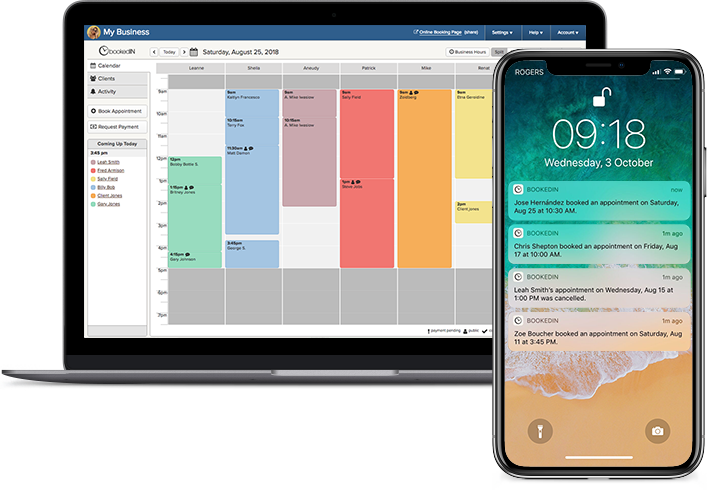
Bookedin can help with the day-to-day side of running your new shop. Clients can reserve a spot any time through your booking page, get automatic confirmations and reminders, and pay a deposit or the full price upfront.
Meanwhile, you can manage every barber’s schedule, keep notes on each client, and check reports to see what’s working as your shop grows.
Bookedin also comes with a free trial, so you can test out all its features and get the hang of it before clients start scheduling appointments.
Keep your barbershop organized & booked solid
Everything you need to manage your schedule in one place.
- ✓ Take deposits
- ✓ Automatic reminders
- ✓ Calendar sync
- ✓ Mobile-friendly booking
About the Author

With over a decade of experience across startups, online publications, and agencies, Marcy is all about delivering content that connects brands with the audiences they're trying to reach.