Are Barbershops Profitable in 2026? Revenue, Costs, & Real-World Benchmarks
If you’ve ever wondered, “Can I actually make good money running a barbershop?” you’re not alone. The short answer is yes, barbershops can be profitable, but that isn’t guaranteed.
In this article, we’ll cover typical barbershop revenue streams, operating costs you’ll need to budget for, and the benchmarks that can help you set realistic expectations.
The Barbershop Industry in 2026
To better answer the question of whether barbershops are profitable, let’s look at what the most recent numbers say about profitability.
Recent data estimates that the U.S. barbershop industry generated $7 billion in 2025 revenue, with a 9.8% compound annual growth rate over the past five years.
However, just because the industry is “growing,” doesn’t mean a full schedule will magically happen for your barbershop. It simply means there are still plenty of people getting cuts — and new shops are opening because the demand is there.
So, if you’re a barbershop owner, what matters is whether you can earn repeat visits. Fortunately, you don’t need to be the cheapest or trendiest shop in town — you just need to be the one clients can count on and can book without hassle.
Are People Still Spending on Haircuts?
Yes, of course. Even when people tighten their budgets, most don’t stop getting haircuts. They might stretch the time between visits, but grooming is still a regular need.
This is a major reason barbershops tend to have steadier demand than other service businesses.
In 2026, the bigger shift isn’t whether clients exist, but how they choose where to go. Many clients want convenience: easy booking, predictable and quality service, and a shop that runs on time.
That said, if your shop makes it simple to get in and out (and clients know what they’re paying), you’re most likely already ahead of most of your competition.
Also read: How Beginner Barbers Can Build a Steady Client Base
Factors Affecting How Much a Barbershop Can Make
There are four things that shape a barbershop’s monthly income:
- Appointments per day (per barber): How many paying time slots you sell
- Average ticket: How much each visit is worth (cut, beard, add-ons, etc.)
- Days open per month: How many chances you have to earn money
- Show-up rate: How many booked appointments actually happen
If one of these is weak, your income is likely to take a hit. For example, you can have great pricing and strong demand, but if no-shows are common, you’re losing paid time you can’t get back.
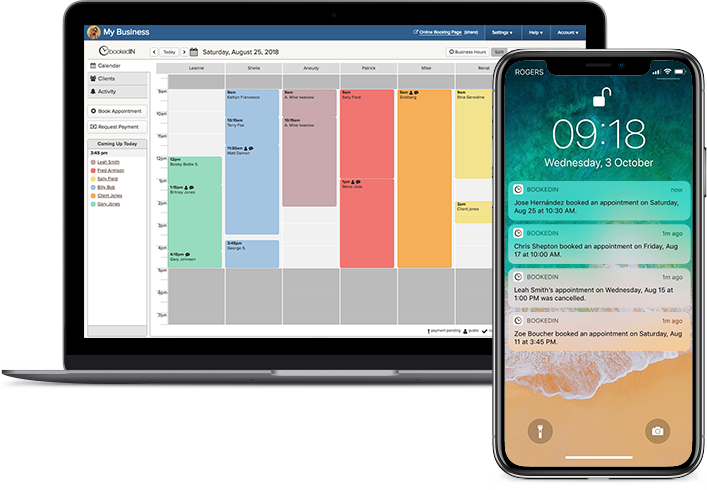
Quick tip: Using a tool like Bookedin helps you improve on those four income drivers by making online booking easy for clients, showing add-ons during booking to increase sales, sending automatic client reminders, and more.
Book a free demo & see how it works
Ways That Barbershops Bring In Money
Below are the most common revenue streams for barbershops:
- Cuts and fades: The core service and the main reason most clients book. This is the “volume” that keeps the shop moving.
- Beard services: Beard trims, line-ups, and full beard work often pair naturally with a haircut and can boost what each visit is worth.
- Kids/senior pricing (optional): Some shops use this to attract specific groups without discounting everything across the board.
- Add-ons: Hot towel finishes, razor line-ups, enhancements, or extra detailing can raise your average ticket without needing a whole extra appointment.
- Retail: Pomade, clay, beard oil, and shampoo can add steady side revenue if you keep it tight and only stock what clients actually buy.
- Memberships or packages (shop-dependent): These can create more predictable income and repeat visits, but they work best when your clientele likes routine and your schedule can handle it.
Also read: 8 Smart Ways To Boost Your Barbershop Revenue
Barbershop Overhead Costs & Operating Expenses
When you’re trying to figure out if a barbershop is profitable, it helps to separate expenses into two main categories.
Fixed costs are the bills you pay every month, even when business has been slow. These include:
- Rent
- Utilities and internet
- Insurance and licenses
- Laundry and cleaning (especially if you outsource it)
- Client scheduling and POS software
[cta_barber_2]
On the other hand, variable costs are tied to how busy the shop is, so these usually increase as you take more clients or appointments. Some examples are:
- Supplies like sanitation products, blades, neck strips, paper towels, and disposable items
- Product costs (if you sell retail, you have to buy inventory before you profit)
- Card processing fees
- Marketing expenses such as ads, promos, or paid listings
Knowing the difference between these two matters because a shop can look “busy” but still struggle if the fixed costs are too high for the revenue coming in.
Labor & Pay Structure
If you have or are planning to have other barbers working at your shop, your labor costs will also be a major factor. The pay setup changes how predictable your costs (and revenue) are.
Here are the three most common models:
- Booth or chair rental: The barber pays you a fixed rent to use the chair or booth, while they often get to keep their service money.
- Commission: The barber earns a percentage of each service; this would be considered a variable cost.
- Hourly/employee: You pay the barber a specific amount depending on how many hours they work; this often a fixed (or semi-fixed) cost.
Two barbershop owners with the same number of clients can end up with very different take-home pay based on how barbers are paid. So, it’s worth picking the model that fits what you’re trying to build.
Note: Bookedin helps multi-staff barbershops stay organized with one shared calendar, real-time booking updates, and staff access controls to prevent accidental changes.
Explore all features with a 14-day trial
What Counts as a “Good” Barbershop Profit?
It’s easy to look at a busy barbershop schedule and automatically assume you’re doing great because the register (or card machine) was constantly going.
However, it’s important to remember that profit is what’s left after all the bills are paid, not just what came in.
A simple way to think about it is this: Revenue is the money coming in, expenses are the money going out, and profit is what’s left over. If you don’t subtract expenses like rent, supplies, software, and labor, you’re only seeing the top line.
That’s why two shops can bring in similar revenue and still have totally different take-home results.
Owner Earnings vs. “True Net Profit”
When people talk about “profit,” they’re not always talking about the same thing — and that’s where a lot of confusion starts.
Net profit is the business’s profit after expenses (e.g., rent, supplies, software, marketing, labor), before you decide how the owner gets paid.
Meanwhile, owner earnings (often called seller’s discretionary earnings, or SDE) are basically what the business owner can take home after certain business expenses — and if the owner works in the shop, it may include their compensation.
That said, make sure you know which number you’re looking at, so you don’t end up comparing apples to oranges. If you’re reading industry benchmarks, always check whether the number is talking about owner take-home or strict net profit.
Also read: How To Raise Barbershop Prices Without Losing Your Regulars
Realistic Profitability Benchmarks for Barbershops in 2026
A “good” profit margin depends on your rent, your pay model, and your market, so the smartest move is to use real-world benchmarks and then adjust for your local costs.
To anchor expectations, sales data from recently sold barbershops and hair salons shows a median annual revenue of around $360,000 and a median cash flow of around $92,000 (“cash flow” here is closer to owner-earnings/SDE than strict net profit).
Also, keep in mind that when we say “median,” that’s a middle-of-the-road reference point, not a promise of what every shop will earn.
What pushes those numbers up or down is usually pretty straightforward: rent level, pricing, how consistently booked the schedule is, and how the shop is staffed.
If your rent is high and your prices haven’t kept up, you can have a packed shop schedule and still barely see any real profit.
Barbershop Profitability by Shop Size (Estimates)
As mentioned, the median barbershop revenue sits around $360,000 per year, but that figure mixes every barbershop size together.
In reality, a solo barber and a five-chair shop run on completely different math, so here’s roughly what you can realistically earn at each shop size.
Remember to treat these only as illustrative estimates built from typical cuts per day, average tickets, and days open. Your actual numbers will shift with your rent, pricing, and pay model.
| Shop size | Typical gross annual revenue | Typical net margin / owner earnings |
|---|---|---|
| Solo barber (1 chair; owner-operator) | $60,000–$120,000 | 60–80% of revenue (you keep most of it, minus rent and supplies) |
| Small shop (2–3 chairs) | $150,000–$350,000 | 15–30% net, plus the owner’s own service income |
| Larger shop (5+ chairs) | $350,000–$700,000+ | 10–20% net (higher overhead, payroll, and rent) |
A pattern worth noticing here is that solo barbers keep the biggest share of what they earn because their costs are low, but their total income is capped by how many cuts one person can do.
Meanwhile, bigger barbershops earn far more in total, but run on thinner margins, since payroll and rent eat a larger slice of their revenue.
How Many Haircuts Does It Take To Break Even?
Before you can talk profit, you need to know your break-even point, which is the number of cuts that just covers your costs. The math is simpler than it sounds:
Monthly fixed costs ÷ profit per cut = cuts needed to break even
Note that your “profit per cut” is your average ticket minus what each cut costs you to deliver (e.g., supplies, card fees, and any commission split).
So, say your fixed costs (rent, utilities, insurance, software) run $4,000 a month, and your average ticket is $35 with about $5 in per-cut costs, leaving $30 profit per cut:
$4,000 ÷ $30 = about 134 cuts a month, or roughly 6–7 cuts a day in a 22-day month, just to break even.
Everything above that is profit. This is why two things make such a big difference: your average ticket and your show-up rate.
So, bump up what each visit is worth with add-ons or better pricing, and keep no-shows low, since losing even 10% of your booked cuts means you’ll need more appointments just to reach break-even.
What Separates Profitable Barbershops From Struggling Ones?
Two shops on the same street, with similar rent and similar foot traffic, can end up worlds apart on profit. The difference usually comes down to a few habits rather than luck.
- They protect their show-up rate. A booked chair only counts if the client actually arrives. Shops that send automatic reminders and take deposits for bigger services lose far less paid time to no-shows.
- They increase what each client spends per visit through add-ons and retail, rather than relying on client volume alone. Done as a helpful recommendation rather than a hard sell, this raises income without packing more people into the schedule.
- They pick the right pay model. Matching booth rent, commission, or hourly pay to how the shop actually runs keeps labor costs predictable instead of quietly draining margin.
- They make booking effortless. Profitable shops let clients book online anytime instead of relying on phone tag and walk-ins. Easy booking fills more slots, and it captures the clients who’d otherwise give up after a missed call.
[cta_barber_3]
Are Barbershops Profitable in 2026? – Key Takeaways
As you can see, the answer to that question is yes, but it’s not that simple. You get profitable by running a shop where your pricing, schedule, and costs actually work together.
Also, remember that revenue is driven by a few simple pieces: how many appointments you can do, how much each visit is worth, how often you’re open, and how often clients actually show up. Meanwhile, profit is what’s left after rent, labor, and supplies take their cut.
Whether you’re opening a barbershop or you’ve been running one for years, the quickest path to more consistent revenue is to make it easy for clients to book and ensure they’ll show up.
Bookedin helps with that by letting clients book online while the system sends them automatic confirmations and reminders, so fewer appointments fall through. If you’re on the fence, you can sign up for free and try it with a 14-day trial.
FAQ Related to Barbershop Profitability
About the Author

The Bookedin Team is made up of writers, marketers, and people who genuinely understand the day-to-day of running a service business. Our articles cover everything from scheduling and client management to marketing and business growth — because running a service business is no small feat.