8 Tips for Managing Your Tattoo Studio
Learning how to manage a tattoo shop well means building simple systems that keep your schedule organized, your artists focused, and your clients happy, and your revenue steady — all without burning out.
This guide breaks down practical, no-nonsense ways to organize your schedule, team, money, and shop operations so you can focus on what matters: doing great tattoos and keeping your chairs full.
8 Tips for How To Manage a Tattoo Shop
Below are tips that focus on the behind-the-scenes systems that’ll keep your tattoo studio running like clockwork.
1. Set up solid shop systems
To really learn how to manage a tattoo shop, you need simple, repeatable systems for booking, deposits, walk-ins, and daily cleaning.
Start with scheduling. If you’re still accepting bookings through Instagram messages and random texts, you’re wasting hours and opening up room for mistakes. You need a dedicated tattoo booking software that centralizes appointments, sends automatic reminders, and lets clients self-book without chasing you.
Next, write down your policies: deposits, reschedules, late arrivals, and touch-ups. Make sure your clients can easily understand these, then post them online and in the shop.
Finally, build a daily open/close checklist so the shop is always clean, stocked, and ready. When your systems are written and visible, your staff can follow them without asking you every five minutes.

Streamline your bookings
Join thousands of studios saving time with online scheduling.
2. Tighten your scheduling, booking, and no-show process
Scheduling is where most shops lose time and money. If you want to manage a tattoo shop efficiently, you need a booking flow that protects your calendar and filters out time-wasters.
For starters, you should have an online booking page where clients can see your availability, read your policies, and request or book a slot.
Also, it’s best to require a non-refundable deposit for all appointments, even small ones. This cuts no-shows and last-minute cancellations fast.
Block time in your calendar for drawing, breaks, and cleanup so you don’t overbook yourself.
Lastly, decide how you’ll handle walk-ins: certain hours, certain artists, or a waitlist. The goal is a schedule that feels full but not frantic.
3. Build a strong team and shop culture
A tattoo shop runs on people, not just machines and needles. Start with clear roles: who handles the front desk, who answers calls, who cleans, who restocks, who closes.
Don’t assume artists “just know.” Put it in writing. Set shop standards for client communication, consent forms, hygiene, and how to handle complaints. When your team knows what’s expected and feels supported, the shop runs smoothly.
Hold short weekly check-ins to review the schedule, problem clients, and upcoming events. Keep them focused and under 30 minutes.
When hiring, look beyond portfolios. You want artists and counter staff who are reliable, clean, and respectful. A toxic but talented artist will cost you clients and sleep. Protect your culture by backing your policies, not playing favorites.
4. Track your money, pricing, and profit closely
Busy doesn’t always mean profitable. Effectively managing a tattoo shop involves knowing where your money goes and what each hour is worth.
Start by tracking all income and expenses like rent, supplies, utilities, software, marketing, and payouts to artists. Decide on a clear structure: booth rent, commission, or hybrid. Review it yearly.
Set minimum charges and hourly rates that reflect your costs, skill, and demand. Stop undercharging for small pieces “just to be nice.” That time still blocks your calendar.
Use deposits not only to secure bookings but also to improve cash flow. Consider charging more for weekends or large custom work.
Look at your numbers monthly: which artists are booked solid, which days are dead, which services bring the most profit. Adjust your pricing and hours based on real data, not gut feeling.
Reduce no shows and double booking
Simple online scheduling tuned for studios.
5. Build a client experience that’ll keep people coming back
Good tattoos bring people in. A smooth experience for clients brings them back and gets you referrals.
To ensure each step of the client journey goes well, start with clear info before they even book: pricing ranges, wait times, policies, and what to expect. Use client messaging tools to send confirmations, reminders, and prep instructions automatically.
During the appointment, keep the vibe professional: clean station, clear consent forms, and honest talk about pain, healing, and touch-ups.
After the session, send aftercare instructions in writing, not just verbally. A system like Bookedin can handle follow-up messages and reminders for touch-ups.
The easier you make it to work with you, the more your clients will stick with your shop instead of shopping around.
Book a free demo & see how it works
6. Keep your shop clean, safe, and inspection-ready
Health rules are not optional. If you want your shop to last, you need strict, consistent standards for cleanliness and documentation.
So, build a written protocol for setup, breakdown, and sterilization for every station. Train every artist and apprentice on it and refresh often. Keep copies of licenses, bloodborne pathogen certificates, and inspection reports in one place.
Use a daily log for spore tests, autoclave cycles, and chemical indicators if you use them. Stock PPE, barriers, and disinfectants and assign someone to check inventory weekly. Post your health and safety rules where clients can see them.
During inspections, be organized and cooperative. A clean, compliant shop protects your clients, your reputation, and your income. One bad infection story online can undo years of good work.
7. Use software and automation to make things easier
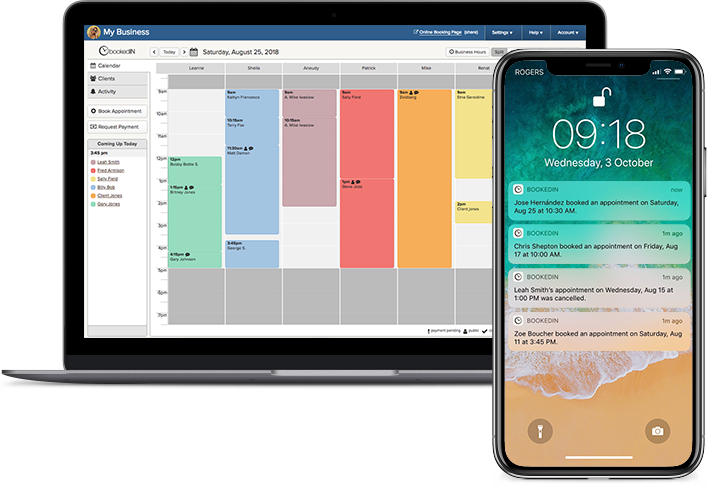
If you’re serious about learning how to manage a tattoo shop, you need tools that handle the repetitive work for you. A platform like Bookedin gives you an online booking page, a shared calendar for all artists, automated reminders, and client messaging in one place.
This means clients can book 24/7 without waiting for a reply. Deposits are collected upfront, so you’re not chasing payments. Each artist can see their day at a glance, and front desk staff can move appointments without endless phone calls.
Make sure to automate reminders by text and email whenever possible, so you’re not manually messaging every client the night before.
Overall, the less time you spend on admin, the more time you have for drawing, tattooing, and training your team.
8. Keep bookings steady with simple marketing habits
Managing a tattoo shop also means ensuring you have a steady flow of the right clients. You don’t need fancy campaigns — just consistent, simple habits that help promote your shop.
Keep your Google Business Profile updated with hours, photos, and a link to your booking page. Post healed work, flash, and shop updates regularly on social platforms, but always push people back to your online booking, not your DMs.
Make it a point to ask happy clients for reviews (with a direct link), as well as for permission to share healed photos.
Run occasional flash days or guest spots to fill slow periods, but track if they actually bring repeat clients. Use your client messaging system to send occasional updates about openings, new artists, or promotions.
Focus on building a reputation for clean work, clear communication, and a professional environment. That’s what keeps your chairs full long term.
With steady marketing habits, you rely less on luck and more on a predictable flow of clients who already trust your shop.
Stop losing time in your messages
Let clients pick a time and confirm instantly. Your schedule stays full and your inbox stays quiet.
- ✓Collect deposits seamlessly
- ✓Automatic reminders
- ✓Calendar sync
- ✓Mobile‑friendly booking
FAQ About How To Manage a Tattoo Shop
What policies does every tattoo shop need?
At minimum, you need clear policies for deposits, cancellations, reschedules, late arrivals, touch-ups, and refunds.
You should also add rules for age limits, ID requirements, and health conditions.
Keep the language simple. Post them on your website, booking page, and at the front desk so there are no surprises for clients or staff.
How can I keep my shop organized day to day?
Use a shared calendar, daily open/close checklists, and a simple inventory list. Assign specific tasks to specific roles so nothing gets missed.
Hold a short weekly meeting to review the schedule, supplies, and any issues.
The goal is to rely on written systems, not memory.
Do I really need tattoo booking software to manage my studio?
If you’re busy, yes. Tattoo booking software like Bookedin cuts back-and-forth messages, centralizes your calendar, automates reminders, and handles deposits.
That means fewer no-shows, fewer double-bookings, and less time stuck on your phone. It’s one of the fastest ways to make your shop feel more controlled and professional.
Should I use booth rent or commission for my artists?
It depends. Booth rent gives you a predictable income but less control over artist schedules. Commission ties your income to how busy the artists are, but can be more flexible for newer shops.
Many owners use a hybrid: lower booth rent plus a small commission. Whatever you choose, put it in writing and review it yearly based on your numbers.