How To Open a Tattoo Shop: A Step-by-Step Guide for Beginners
Figuring out how to open a tattoo shop can feel like a lot, given that it’s not just about having a cool space to make art. You’re also setting up a business that has to meet health codes, pass inspections, and be managed properly.
However, that process feels a lot less daunting when you break it into clear steps — which is exactly what we’ll do in this guide.
Whether you’re a solo artist moving up from renting a booth or someone on the business side teaming up with a tattoo artist to launch a shop, you’ll find straightforward, practical steps here to get you from idea to opening day.
Step 1: Assess Your Readiness
Before you spend a dollar on a lease or a logo, make sure your foundation is solid. Two areas matter most: your craft and your mindset for running a business.
Start by checking your tattoo portfolio. It must show consistent, healed results in the styles you want to offer at your shop.
Just as important are hygiene fundamentals and shop etiquette. You should be knowledgeable about cross-contamination prevention, proper barrier use, surface disinfection, and sharps handling.
Once those habits are steady, shift the same discipline to the business side. Familiarize yourself with basic cash flow: Know what’s coming in, what’s going out, and what happens in slow months.
It’s also good to write simple, visible policies for deposits, reschedules, and no-shows so money conversations won’t turn into awkward debates with clients.
From there, put a few simple systems in place, such as a shared calendar, a central spot for client notes and consent forms, and an opening/closing checklist you follow every day.
Reduce no shows and double booking
Simple online scheduling tuned for studios.
Step 2: Ensure You Meet the License & Training Requirements
Given that tattooing is a medical-adjacent service, authorities will be looking at your credentials and your shop’s setup. Most areas require an artist license (for the person doing the tattooing) and a facility or establishment license (for the place where the work is done).
Expect health inspections that check basics like hand-wash sinks, approved disinfectants, sharps disposal, and proper storage. Many jurisdictions also require current bloodborne pathogens training and often CPR and first aid.
As for training, you’ll need to show proof of training hours, supervised procedures, and knowledge of health and safety. That might mean a formal apprenticeship with a licensed mentor and a log of what you did and learned. If you’re self-taught, be ready with certificates (e.g., bloodborne pathogens), letters from supervisors, and a clear record of hours and responsibilities.
Step 3: Map Out Your Costs and Funding
It’s important to plan your spending properly to avoid unnecessary surprises that’ll stress you out. To do that, divide your expenses into one-time and ongoing.
One-time expenses include build-out (plumbing for sinks, washable flooring/paint, lighting), furniture (client chairs, artist stools, storage), sterilization equipment, machines and power supplies, signage, and initial inventory of cartridges, needles, inks, barriers, and aftercare.
You’ll also pay for your first round of permits and licenses, as well as initial marketing (website, photography, branding). As for ongoing costs, these include rent and utilities, replenishing consumables, laundry, insurance, software, payroll/contractor pay, merchant fees, taxes, and routine maintenance.
You should also add a contingency fund of about 10–15% of your total projected startup budget to cover anything that ends up costing more or taking longer than planned.
With the numbers in view, choose how to fund the launch of your tattoo shop. Savings and personal investment keep things simple. If you need more, look at small business loans, community lenders/microloans, grants, or a partnership with clearly written terms (e.g., roles, payouts, and exit terms).
Step 4: Choose a Business Structure, Then Register
Your structure affects taxes, paperwork, and how well your personal assets are protected. Keep it simple, but pick intentionally.
Sole proprietorship vs. LLC vs. corporation
A sole proprietorship is the default for one-person businesses. It’s the easiest and cheapest option, but your personal assets are on the line if something goes wrong, given that it doesn’t separate your personal and business liabilities.
An LLC (limited liability company) is popular for small studios because it separates personal and business assets with relatively light administration. Meanwhile, a corporation often makes sense for larger teams or outside investors but it comes with more formalities.
If you’re unsure, an LLC is often the most practical starting point; you can change later as you grow. You might also want to consult a local accountant or attorney for extra measure.
Registration steps
Start by choosing a shop name and checking if it’s available in your state (and ideally as a domain and social handle).
Next, apply for an EIN (Employer Identification Number) from the IRS. It’s free and keeps you from using your personal Social Security number on business bank and tax forms.
Register your business entity with the state, then apply for any required local business licenses, and get a sales tax permit if you’ll be selling things like merch or aftercare products. If the name you’re using publicly is different from your legal business name, file a “doing business as” (DBA) so you can use that shop name legally.
Once everything else is in place, open a business bank account and run all studio income and expenses through it. Keeping business money separate from personal money makes bookkeeping, taxes, and audits much easier (and cheaper) to handle.
Insurance you’ll likely need
Plan on three basics to start:
- General liability, which covers things like slips, trips, and damage to a client’s belongings
- Professional liability, which covers claims related to the tattoo work itself, like an infection or an alleged mistake
- Property insurance, which covers your equipment, furniture, and any improvements you’ve made to the space
If you have employees, workers’ compensation is typically required by law to cover them if they get hurt on the job.
It’s also smart to consider cyber or data coverage if you store client records, payment details, or consent forms digitally, and business interruption insurance to help pay your bills if a covered event (like a fire or flood) forces you to close for a while.
Many landlords will require proof of these policies before they finalize your lease, so it’s good to prepare these early on.
Step 5: Pick Your Location and Layout
Choose a space you can keep clean and compliant every single day, not just on inspection days.
Your floor plan or layout should be easy for health inspectors to see what they need to: hand-wash sinks near work areas, a separate cleaning or sterilization zone, clearly labeled sharps containers, and closed storage for inks, PPE, and important paperwork.
Then, walk the room like a client. Make sure the path from reception to the workstation is clear, and that you can offer privacy for clients without blocking your ability to supervise what’s happening in the shop.
Before you get attached to a location, you should also check zoning and signage rules, and look at practical details like parking, transit access, and whether you’re depending on walk-ins or positioning yourself as a destination studio.
Read the lease very carefully and watch for “as-is” clauses that make you responsible for expensive build-out or HVAC issues, limits on your hours or signage, and big rent increases every year.
You might also want to negotiate for a tenant improvement allowance and a rent-free build-out period so plumbing and sink installs don’t crush your budget.
Finally, sketch your layout on paper (or simple software) and confirm it with your health department before you sign. A quick pre-inspection conversation can save you from tearing out and redoing work later.
Step 6: Stock Up on Supplies and Equipment
Before you start ordering cool machines and fancy chairs, make a list of what you actually need to tattoo safely and comfortably from day one. It helps to think in three main buckets: tattooing equipment, health and safety gear, and aftercare supplies.
Below is a simple breakdown to guide your setup. Use it as a starting checklist, then adjust based on your budget, your local health code, and the styles you plan to focus on.
Note: It’s better to open with a solid, safe setup and add extras over time than to overbuy and cut corners on the things that actually protect your clients and your license.
Tattooing equipment
- Tattoo machines
- Tattoo needles and cartridges
- Tattoo ink and ink caps
- Tubes, tips, and grips
- Power supplies and clip cords
- Adjustable tattoo chairs and beds for clients, plus stools for artists
- Stencil products (stencil paper, printer, transfer gel)
- Sketchbooks or reference books for designs and inspiration
Health and safety products
- Autoclave or approved sterilizer (if you’re using reusable equipment)
- Medical gloves, masks, and aprons
- Surface covers, barrier film, and chair/table covers
- Hospital-grade disinfectants and workstation cleaners
- Sharps containers and proper needle waste bins
- Sterilization pouches and storage for sterile items
Aftercare and finishing touches
- Bandages, gauze, and protective film dressings
- Cleansing gel or wash suitable for fresh tattoos
- Tattoo aftercare cream or ointment
- Pump bottles or disposable packets for hygienic dispensing
Also read: Tattoo Aftercare Instructions You Can Send Automatically to Clients
Step 7: Hire Intentionally and Set the Culture
When you evaluate artists who’ll be working at your tattoo studio, don’t just judge them by flashy Instagram posts. You also have to look at healed photos to see how their work holds up, ask about their hygiene routine, and notice how clearly they explain their process and prices.
You want people who aren’t just talented but can also talk to clients respectfully, listen well, and follow health and safety rules without cutting corners.
Apply similar practices when hiring for non-artist roles like front desk staff. Yes, they don’t need to come up with designs, but they do need to be friendly, organized, confident when talking about store policies, and able to keep calm when the shop is busy or a client is upset.
Once you’ve chosen your team, train them on how you want things done instead of assuming they’ll “just get it.” Walk everyone through your booking system, deposit rules, cleaning checklists, and how to handle common situations, like late clients or someone asking for a style that isn’t a good fit.
Set fair scheduling and rotation practices from the start so walk-ins, leads, and popular time slots are shared in a way that feels transparent, not like favoritism.
If you plan to bring in apprentices, create a simple written program with clear milestones, supervision, and limits on what they can do at each stage so they’re learning safely and not being used as free labor.
Also read: How To Handle Negative Customer Reviews
Step 8: Set Your Health and Safety SOPs
Turn your safety standards into short, usable checklists so your team does things consistently, day after day. Create daily opening and closing routines, a sterilization log you sign off on, and simple rules for ink handling, barrier setup, and sharps disposal.
Spell out exactly how consent works before every session: ID and age verification, health disclosures, risk and aftercare review, sobriety confirmation, and signatures. Then, attach those forms to the specific appointment or client file.
Store chemicals, inks, and PPE in labeled, closed cabinets; keep clean and dirty zones separate; and document how to handle spills or exposure incidents.
Train the whole team on these SOPs during onboarding, then refresh quarterly so everyone keeps following the same safe process over time. Finally, review your procedures against your local health code at least once a year; small tweaks now are cheaper than failed inspections later.
Step 9: Build Your Online Presence and Brand
Think of your online presence as your digital storefront. More often than not, it’ll be the first place people “walk into” before they ever see your studio in person.
Start with a simple, fast website as well as social media accounts that clearly explain what tattoo styles you specialize in, how much you charge, and how to book.
Include recent portfolio photos (both fresh and healed), short artist bios, clear services and pricing, your shop policies, and straightforward aftercare instructions.
Next, claim and fully complete your Google Business Profile so you show up in local search and on Maps when someone types like, “tattoo shop near me.”
Add high-quality photos of your work and your space, write a clear description of your studio and styles, and connect a visible “Book” button that links straight to your online scheduler. This makes it more likely for curious folks to book an appointment instantly.

Streamline your bookings
Join thousands of studios saving time with online scheduling.
Step 10: Plan Your Launch Marketing Push
Treat your tattoo studio opening like a short campaign, not just a date on the calendar. To do this, you’ll first have to decide what type of opening you’re inviting people to.
Maybe it’s a soft opening week with limited spots, an official launch day with flash designs, or an open house where people can meet the artists and see the space.
From there, map out two to four weeks of simple promos: teaser posts of the shop build-out, artist intros, sneak peeks of flash, and clear reminders of your opening date and how to book.
Pair that online activity with a few offline moves, like leaving flyers or cards at nearby businesses (such as barbers, salons, gyms, cafes) and sending a short, friendly “We’re opening” email or DM to existing contacts or followers.
Make sure every post, flyer, and announcement includes your booking link or QR code, too. That way, interested folks would be more likely to book an appointment as soon as they spot your promotional materials.
Step 11: Design a Client Journey That Turns First-Timers Into Regulars
Before you open your doors, figure out what you want a client’s experience to look like before, during, and after the appointment.
In the “before” stage, decide how clients will book (ideally online with a deposit), then draft your confirmation and reminder messages so they always include prep tips, parking directions, and your key policies. Set these up as templates or automations now so you’re not writing them from scratch later.
For the “during” stage, outline a simple flow for every appointment: greet, review the design and placement, confirm the price and timing, get final consent, and check in on comfort as you work.
This flow keeps the experience consistent, no matter how busy you are. Make a checklist for how the station should look and feel (clean, organized, calm) so hygiene and professionalism are obvious to nervous first-timers.
For the “after” stage, prepare a standard follow-up message that checks on healing, links to your aftercare instructions, and invites clients to send healed photos you can use in your portfolio or social media. You can also draft a gentle review request and a follow-up note that suggests a touch-up window or ideas for their next piece.
Reduce no shows and double booking
Simple online scheduling tuned for studios.
When all these things are thought through and ready before launch, every new client walks through the same smooth journey from day one, which makes it much easier for them to come back, refer friends, and become regulars.
Step 12: Invest in Booking Software That’ll Keep Your Shop Organized
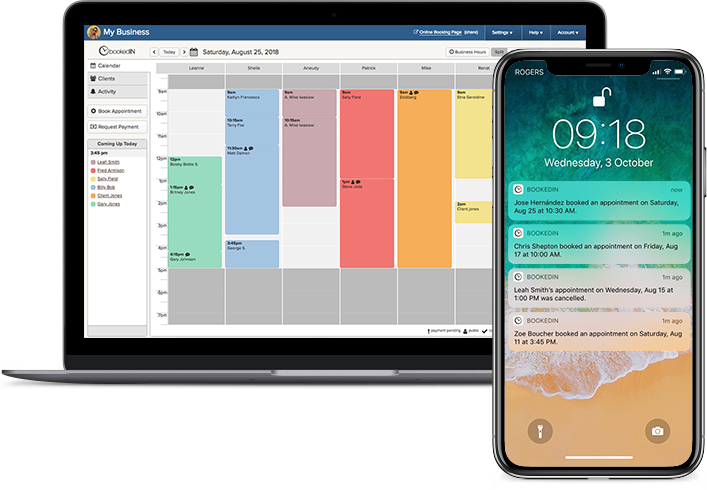
Once you’ve put all this work into opening, the last thing you want is to spend your days glued to DMs and juggling a messy calendar. So, before you officially open your doors, make sure you’ve got a solid booking and scheduling platform.
A good platform handles the repetitive stuff for you: Clients can see your availability, choose a time, pay a deposit, and receive confirmations and reminders without you responding to every single message.
Look for software that lets you set your services, pricing, deposits, and policies once, then applies them automatically each time someone books. It’s even better if it stores client details, notes, and consent forms in one place so you’re not digging through emails or paper folders to remember what you did last time.
As you add artists or extend your hours, the right system will grow with you. That means each service provider can have their own calendar, while you still see the big picture for the whole shop.
Fortunately, Bookedin is built exactly for service businesses like tattoo studios, so instead of trying to manage it all with DIY spreadsheets and chaotic inbox threads, you get a setup that quietly keeps everything organized while you focus on your shop.
See how everything works on Bookedin
Final Word
It’s true that figuring out how to start a tattoo studio can feel overwhelming. But if you break it down into clear steps (like we did above!) and tackle them one at a time, you’ll actually make steady progress.
Sure, there’ll still be learning curves and a few surprises, but that’s true for every shop owner who’s come before you. Keep going, keep refining, and eventually you’ll be standing in your own shop, getting ready for the next client on your schedule.
Stop losing time in your messages
Let clients pick a time and confirm instantly. Your schedule stays full and your inbox stays quiet.
- ✓Collect deposits seamlessly
- ✓Automatic reminders
- ✓Calendar sync
- ✓Mobile‑friendly booking
FAQs About How To Open a Tattoo Shop
Is it hard to open up a tattoo shop?
Yes, it can be. But “hard” mostly comes from not knowing the steps. Once you break it down into clear tasks and follow a checklist, it becomes a structured project instead of a vague, overwhelming idea.
Is tattooing a good business?
Yes, tattooing can be a very good business, especially if you have strong artwork, consistent healed results, and good client communication. Demand for tattoos is steady in many areas, and people often come back for multiple pieces over time.
That said, it’s not “easy money.” You still need solid hygiene, clear pricing, reliable booking, and basic money management. The artists and shop owners who treat it like a real business (not just a hobby) are usually the ones who see the best long-term results.
Is it profitable to own a tattoo shop?
It depends. Owning a tattoo shop can be profitable, but it usually takes time to get there.
Your revenue has to cover rent, utilities, supplies, insurance, software, taxes, and artist pay before you see a profit. As your shop gets busier, your reputation grows, and more clients return, profit usually increases. If you manage costs well and keep a steady flow of bookings, owning a tattoo shop can provide a solid income.
How much money do you need to start a tattoo business?
A small, simple studio for one or two artists can sometimes be started in the ballpark of $10,000–$25,000, while a larger, more polished shop in a busy area can easily run $30,000–$50,000 or more.
Your highest costs are usually build-out (e.g., plumbing, sinks, flooring), furniture, machines and supplies, security deposit and rent, insurance, licenses, and your first round of marketing and software.
The exact number will depend on your location, how fancy the space is, and how much equipment you already own. Whatever your budget, it’s smart to add an extra 10–15% as a cushion for surprise costs.
Can you open a tattoo shop without being an artist?
Yes, it's possible to open a tattoo shop without being a tattoo artist yourself. Many studios are run by an owner or manager who handles the business side (e.g., leases, payroll, marketing, booking) while licensed artists focus on the work on skin.
How much trouble can you get in for tattooing without a license?
Tattooing without the required license can get you into serious trouble. Depending on where you live, you could face fines, orders to stop operating, loss of equipment, and even criminal charges in some cases.
If something goes wrong (like an infection or injury), you could also be personally sued, and the fact that you weren’t licensed will make things much worse.
On top of that, getting caught cutting corners can make it harder to get licensed later. So, always check your local laws and get properly licensed before you ever take money for a tattoo.