How Do Tattoo Artists Charge? Hourly vs. Flat Rate Explained
Most tattoo artists charge one of two ways: by the hour or a flat price for the whole piece. A lot of artists use both, depending on the tattoo project they’re working on. That’s the short answer.
However, you’ll also need to figure out which method fits which kind of work, because using the wrong one can cost you money or scare off clients.
So, if you’ve been unsure how to set up your own pricing, this guide will walk through how each method works and when to choose one over the other.
Note: We’ll keep this focused on the hourly-versus-flat decision. For the full rundown of every pricing model and how to calculate your rate, see our guide on how to price your tattoo services.
How Tattoo Artists Charge (in Plain Terms)
Tattoo pricing isn’t one flat number. The same design can cost widely different amounts from one artist to the next, depending on the method they use (hourly or flat), the shop minimum, the piece itself (e.g., size, detail, placement), and their experience level.
In the next few sections, we’ll walk through how hourly and flat-rate pricing each work, plus where the shop minimum comes in.
Also, one note before we go further: Dollar figures in this article are rough illustrations, not benchmarks. Rates vary a lot by country, city, and even neighborhood, so treat any number here as a ballpark rather than a target.
How hourly pricing works
With hourly pricing, you charge for the time you spend tattooing, usually rounded to the half-hour or hour. It helps ensure you’re paid for the actual work, not a number you guessed at before you picked up the machine.
The client’s total will be based on how long the piece takes. So, a session that runs three hours costs three times your hourly rate (plus your minimum rules, which we’ll get to).
Hourly pricing works best when the time is hard to predict. Detailed, large, or custom pieces can run long for reasons you can’t fully see coming, like skin that takes ink slowly or a design that grows once you start.
For big, multi-session projects like sleeves or back pieces, a lot of artists use a close cousin of hourly pricing: a day rate or per-session rate. Instead of tracking hours, you and the client agree on a flat price for a full or half day in the chair.
It works a lot like hourly pricing, except you’re quoting one price for the whole block of time instead of adding up hours. Day and session rates vary widely, but for context, some studios quote $1,500 to $2,500 per session for large work.
How flat-rate (or per-piece) pricing works
Flat-rate pricing means you quote one fixed price for the whole tattoo before you start. The client knows the exact cost going in, and that number doesn’t change based on how long you take.
This method is recommended for smaller, predictable work where you already have a good sense of the time involved. Most small and medium tattoos are priced by the piece for this reason, along with flash designs, which are pre-drawn and quick to execute.
Clients tend to love flat pricing because there’s no watching the clock and no surprise total at the end. The tradeoff is that the risk shifts to you. If a piece takes longer than you expected, you absorb the cost of that extra time.
So, flat rates work best when you can estimate confidently, which usually comes with experience and with sticking to work you’ve done many times before.
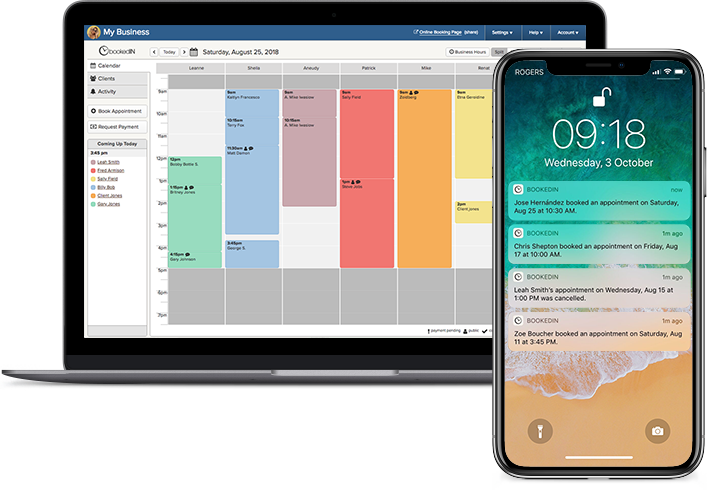
Online scheduling app that does the heavy lifting for you
Clients can book online in a few clicks, so you're not stuck managing bookings.
Where the shop minimum fits
No matter which method you use, the shop minimum is the least you’ll charge for any tattoo (even a tiny one that takes 10 minutes). In the U.S., minimums often sit somewhere around $80 to $150, though like everything else, that varies by location.
The reason to have one is simple: Every tattoo, no matter how small, needs a fresh sterile setup, new needles, ink, and your time to prep and clean up.
Even a simple dot that takes three minutes to execute requires a sterile setup, and those costs don’t shrink just because the design is small. Your minimum makes sure your easiest-to-execute piece still covers what it takes to do it safely.
Think of the shop minimum as the thing that keeps flat-rate pricing from losing you money on small work, and the starting point that hourly pricing builds up from.
When Hourly Pricing Makes the Most Sense
Hourly pricing is typically better for when you can’t reliably predict how long a tattoo will take. Here’s where that comes up most.
- Large or multi-session pieces: Sleeves, back pieces, and other big projects can shift as you go, and a small change in detail or coverage can add hours. Charging hourly (or with a day rate for full sessions) keeps you covered no matter how the piece evolves across visits.
- Heavy detail and realism: Styles like realism, portraits, and fine dotwork are slow by nature, and two designs that look similar in size can take very different amounts of time.
- Freehand and custom work: When you’re drawing straight onto the skin or building a design as you go, there’s no finished stencil to estimate against.
- Cover-ups: Covering old ink almost always takes more time and problem-solving than a fresh piece on clean skin, and you often don’t know the full scope until you’re halfway through.
- Clients with a low pain tolerance: Some clients simply can’t sit for long stretches and need to break a piece into several short sessions. Hourly pricing fits this cleanly, since the client pays for the time they use across each visit rather than a flat price that assumed one straight-through session.
When Flat-Rate Pricing Makes the Most Sense
If you can confidently estimate how long a tattoo will take, a fixed price is simpler for everyone and often more appealing to the client. These are the situations where it’s often the better choice.
- Small, predictable pieces: For simple linework, small script, or tiny illustrations you’ve done a hundred times, you know almost exactly how long the work runs.
- Flash designs: These are pre-drawn and ready to go, so most artists list their flash pieces with a set price attached to each design.
- Walk-ins: Walk-in clients usually want to know the cost before they commit, and they’re often deciding on the spot. A flat price lets you quote a clear number quickly.
- Clients who want a set price up front. A lot of people, first-timers especially, want the exact cost before they commit, and flat pricing gives them that. Just keep your flat prices and minimum where they should be, as to avoid attracting bargain hunters chasing the lowest number.
Hourly vs. Flat Rate, Side by Side
If you’re weighing the two, here’s how they stack up across the things that actually matter day to day.
| Factor to consider | Hourly | Flat rate |
|---|---|---|
| Who carries the risk if the session runs long | The client pays for the extra time | You absorb it, since the price is locked |
| Certainty for the client | Lower; the final total isn’t known until you’re done | Higher; they know the exact cost before you start |
| Certainty for you | Higher; you’re paid for real time worked | Depends on your estimate being accurate |
| Best-fit work | Large, detailed, freehand, or cover-up pieces | Small, simple, or repeatable pieces and flash |
| Quoting effort | A range up front, tallied at the end | One number decided before the session |
| How it feels to a nervous first-timer | Can feel open-ended, like a meter running | Reassuring, since there’s a fixed price |
As you can see, neither one is better across the board, which is why most tattoo artists don’t pick just one and instead match the method to the job.
Why Most Tattoo Artists Use Both
The honest answer to “Hourly or flat?” is usually “Both.” Most artists land on a blended setup, where the pricing method matches the type of work instead of applying one rule to everything.
In practice, that often looks like a flat rate (or your shop minimum) for small, quick pieces, and an hourly or day rate once a tattoo gets big enough that the time is hard to call.
A client booking a small piece of fine-line script gets a clean fixed price, while someone starting a half-sleeve gets an hourly estimate. Same artist, two methods, each suited to the job in front of them.
This is also where your shop minimum earns its keep, since it stops those small flat-rate pieces from costing you money on setup and materials.
Also read: How To Talk About Money With Clients (Without Feeling Awkward)
How To Quote Either Way Without the Awkwardness
Whichever method you use, the goal is the same: Your client should know what to expect before they sit down. Providing enough clarity up front prevents a lot of uncomfortable conversations at checkout.
For hourly work, give a range rather than a single number, and be upfront about what could push the total toward the high end, like added detail, a tricky placement, or skin that takes ink slowly.
For flat-rate work, be clear about what the price includes and where it stops, so a client asking for “just one more small thing” understands that changes the quote. In both cases, you’re setting expectations that protect you and reassure them.
Better yet, you don’t have to have this conversation from scratch every time. When your pricing is visible from the start, clients arrive already knowing roughly what to expect.
An appointment scheduling tool like Bookedin lets you show your services with prices and time estimates right on your booking page.

Make it easy for clients to book an appointment
Let clients pick a time and confirm instantly. Your schedule stays full and your inbox stays quiet.
- ✓ Take deposits
- ✓ Automatic reminders
- ✓ Calendar sync
- ✓ Mobile-friendly booking
FAQ About Hourly vs. Flat Rate Tattoo Pricing
About the Author

The Bookedin Team is made up of writers, marketers, and people who genuinely understand the day-to-day of running a service business. Our articles cover everything from scheduling and client management to marketing and business growth — because running a service business is no small feat.