How To Keep Customers Happy: A Guide for Service Business Owners
For many service businesses, keeping your customers or clients happy isn’t something that just happens on its own.
It’s the result of a bunch of small things done well — clear communication, an easy booking process, consistent quality, and a few other thoughtful touches along the way.
In this article, we’ll share practical tips for how to keep customers happy, whether you run a salon, barbershop, tattoo studio, fitness studio, or any other service-based business.
Why Keeping Your Service Business Clients Happy Matters
In most service businesses, clients aren’t just buying a haircut, a tattoo, or a training session. They’re buying the entire experience of getting that service — from the moment they book to the moment they walk out the door.
That’s what makes customer happiness such a big deal for businesses like yours. In a local market where word of mouth and online reputation carry serious weight, even a few bad impressions can make things noticeably harder for you.
On the flip side, clients who are genuinely happy tend to do a lot of your marketing for you. They come back consistently, they refer friends, and they’re usually open to spending more per visit because they trust you.
PwC even found that 42% of consumers would pay more just for a friendly, welcoming experience — something every small business can offer, regardless of budget. So, in the next section, we’ll go through the most effective ways to make that happen consistently.
Also read: How To Make Your One-Person Business Look More Professional
10 Tips for How To Keep Your Customers or Clients Happy
Below are the most effective ways to keep clients happy when you have a service business. These cover various areas, including clear communication, convenience, personalization, consistency, and more.
1. Set expectations before the appointment even starts
A lot of client frustration doesn’t come from bad service, but rather from mismatched expectations. Say, the client assumed their appointment would take 30 minutes, but it took an hour. Or they didn’t know they had to pay a deposit.
You can prevent such situations by making the important details visible and easy to find before clients confirm their booking.
That means listing what each service includes and how long it takes, showing pricing clearly (not buried in fine print), noting your cancellation and deposit policies upfront, and explaining what clients should bring or do before they arrive.
When all of this info is available on your booking page, clients don’t have to message you with basic questions, and there’s less room for the kind of “I didn’t know that” moments that lead to tension.
Tip: With a tool like Bookedin, you can display service details, pricing, and policies right on your booking page, plus add custom form fields that collect specific info (like style references or allergy notes) at the time of booking.
Book a free demo & see how it works
2. Communicate proactively, not just when something goes wrong
You don’t need to be in constant contact with your clients. That said, even a little bit of communication between visits goes a long way. Of course, this kind of proactive communication doesn’t have to be complicated.
It can be as simple as sending a confirmation right after they book, a reminder a day or two before their appointment, and a short follow-up afterward (e.g., thanking them for coming in).
These touchpoints not only help prevent no-shows, but also show clients that you’re organized and that you care about their experience. Over time, those impressions stack up and keep you top of mind.
Also read: Appointment Reminder Templates To Use for Your Service Business
3. Be honest when things don’t go as planned
No business is perfect, and clients understand that. However, they’re likely to be understanding if they’re ignored, misled, or given excuses when something goes wrong.
So, if you’re running behind schedule, a quick heads-up about delays goes a long way. If a service didn’t turn out as expected or a miscommunication happened during a session, acknowledge it directly, explain what happened, and offer to make it right.
The instinct to minimize problems or avoid bringing them up is natural, but it usually backfires. Clients often respect honesty because it shows that you take their experience seriously.
4. Make booking, paying, and rescheduling as painless as possible
If booking an appointment with your business requires multiple messages and a lot of waiting, people are more likely to just give up and move on to someone with a simpler process.
Clients should be able to check your availability, pick a time, and confirm their booking in a few taps — ideally without having to create an account, download an app, or send a message and wait.
The same goes for rescheduling. If life gets in the way and a client needs to move their appointment, they should be able to do that on their own without it becoming a whole exchange.
These matter a lot because clients don’t always tell you something was annoying or a hassle. Instead, they just don’t come back. Therefore, a smooth process from start to finish removes the reasons they’d quietly drop off.
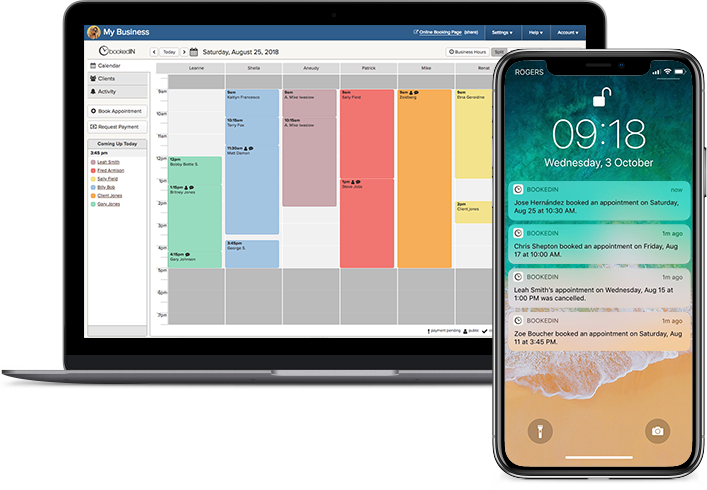
The easiest way to manage your appointments
Let clients grab a spot on your calendar anytime, so you're not stuck handling bookings.
5. Respect their time like it’s your own
Running 10 or 15 minutes behind once in a while is human. Running behind every appointment because you’ve squeezed too many into one day is a pattern, and clients notice it (even if they don’t say anything).
When someone takes time out of their day to come see you, they expect the appointment to start exactly or close to when it was scheduled. That’s why you should set up your appointment calendar with realistic service times, not optimistic ones.
It’s also important to add buffer time between appointments when you know you’ll need it. This is especially true for services that tend to run long or require cleanup between clients.
And if you do end up falling behind, acknowledge it. A quick apology and a realistic estimate of the wait go much further than pretending nothing happened and hoping the client doesn’t notice.
6. Remember the details that matter to them
Remembering a client’s preferences, past services, and small personal details is one of the easiest ways to make the client’s experience feel more personal and less transactional.
It doesn’t take a perfect memory, either. All you need is a reliable system for jotting down notes after each visit so you (or whoever services that client next time) can pick up right where you left off.
This is especially helpful when a client books with a different staff member than usual. If the new person already knows what was done last time and what the client prefers, the transition feels seamless instead of awkward.
Tip: Bookedin’s client notes and history feature lets you store preferences, past visit details, and even attach reference photos to each client’s profile. That way, your team always has the context they need.
Try it with a 14-day free trial
7. Tailor your recommendations whenever possible
When you suggest an add-on, product, or follow-up appointment, it should feel like it’s based on what you’ve actually observed about that specific client, not something generic and scripted.
For instance, if you notice a client’s tattoo is healing well, but they mention dryness, recommending a specific aftercare product makes sense. If you’re a trailer and a client mentions an upcoming 5K, suggesting a session focused on endurance is a natural fit.
These kinds of relevant, personalized recommendations feel helpful because they are helpful — and clients can tell the difference between that and a generic upsell.
Clients can often tell a relevant, personalized recommendation apart from a routine pitch. The former builds trust; the latter feels like a pushy sales tactic.
8. Aim to deliver the same good quality every time
This doesn’t mean every visit has to be identical. It simply means clients should always leave feeling like they got the same level of care and professionalism they’ve come to expect from your business.
Consistency comes down to having clear standards for how your shop runs and making sure everyone on your team follows them.
That includes how clients are greeted, how services are performed, how stations or rooms are set up, and how checkout works. When those basics are locked in, the quality doesn’t depend on who’s working that day or how busy things are.
Also read: How To Turn Your Instagram Followers Into Paying Clients
9. Follow through on what you promise
If you promise to hold a slot for a client while they decide, actually hold it. Or if you say you’ll follow up with a quote by Friday, make sure it goes out on or before Friday.
Sure, a small broken promise here and there might seem minor, but those add up over time. Clients then start to feel like they can’t fully rely on you, and that’s often enough to make them start looking at other options — even if your actual service is great.
So, don’t commit to things you can’t follow through on, and when you do commit, make sure you have a system in place to keep track.
Even something as basic as a reminder on your phone or a note in the client’s profile can be enough to make sure nothing falls through the cracks.
10. Surprise clients with small, thoughtful gestures
You don’t need a big budget or an elaborate loyalty program to make clients feel appreciated. Sometimes, the simplest gestures leave the strongest impression.
This could be a complimentary drink while they wait, a handwritten thank-you note after their first visit, remembering that they mentioned a job interview and asking how it went, or tossing in a small product sample after a service.
The key is that the gesture should feel genuine and specific to them, not performative or mass-produced.
These tiny moments also tend to be what sticks with clients and what they’d mention when they recommend your business to a friend.

The easiest way to manage appointments
With tools like 24/7 online scheduling, automated reminders, calendar syncing, easy payments, and more.
What To Do When a Client or Customer Isn’t Happy
Even if you do everything right, there will still be times when a client isn’t satisfied.
Maybe there was a miscommunication about what they wanted, maybe the end result didn’t match their expectations, or maybe something went wrong with scheduling or pricing. It happens to every business eventually.
What matters most in those moments is how you respond. Keep these three things in mind: Don’t get defensive, don’t minimize their concern, and don’t make excuses.
Instead, listen to what they’re telling you, acknowledge the issue, and focus on what you can do to fix it.
In many cases, a calm, honest response and a genuine effort to make things right can actually strengthen the relationship. That’s because the client sees that you take their experience seriously, even when things go sideways.
It also helps to pay attention to early signs that something is off before it turns into a full complaint. Checking in with a simple “How’s everything looking?” or “Anything you’d want me to adjust?” gives them a low-pressure way to speak up.
For a deeper look at how to navigate these situations (including what to say, how to de-escalate, and when to set boundaries) check out our full guide on how to handle difficult clients.
Key Takeaways on How To Keep Customers Happy
Keeping your clients happy doesn’t require grand gestures or a complete overhaul of how you run your business.
For the most part, it comes down to a handful of consistent habits: communicating clearly, making things easy, paying attention to who your clients are, delivering reliable service, and adding the occasional small touch that shows you care.
And if you want to make a lot of these habits easier to manage, Bookedin can definitely help!
From a branded booking page and automated reminders to client notes, payment processing, and custom intake forms, it handles the systems side so you’re not stuck juggling admin work when you could be focusing on clients the way you should.
FAQ About How To Keep Customers Happy
How do I keep my clients happy without lowering service prices?
Remember that price is rarely the main reason clients stop booking with a particular service business.
So, focus on making the appointment booking process easy, communicating clearly, and delivering a reliable, personal experience every visit.
When clients trust you and genuinely enjoy the experience, they’re far less likely to shop around just because of prices.
How do I know if my clients are actually happy?
Clients who are happy tend to come back consistently, recommend you to others, and leave positive reviews or testimonials without you having to ask multiple times.
On the other hand, if you’re seeing a drop in repeat visits or getting fewer referrals, that’s worth paying attention to — even if no one has complained directly.
Are customer satisfaction and customer happiness the same?
No, these aren't one and the same.
Satisfaction means the client got what they expected and the service was fine, nothing went wrong. Meanwhile, customer happiness goes a step further: The client genuinely enjoyed the experience and feels good about choosing your business.
Satisfied clients might come back if it’s convenient. Happy clients come back because they want to, and they’re more likely to tell others about you
About the Author

With over a decade of experience across startups, online publications, and agencies, Marcy is all about delivering content that connects brands with the audiences they're trying to reach.