How To Price Your Tattoo Services
Figuring out how to price tattoos is one of those things tattoo artists tend to second-guess, even when they’re already established. And the honest truth is there’s no one correct number that guarantees you’re charging enough.
What you charge depends on your experience, your costs, your location, and the kind of tattoo work you do. But that doesn’t mean pricing a tattoo is all just a guessing game either.
In this article, we’ll walk through what goes into a tattoo price, the main pricing models artists use to set their rates, and how to estimate a piece for a client.
What Goes Into Pricing a Tattoo?
Before you land on an hourly rate or a flat price, it helps to understand what you’re actually pricing. After all, a tattoo isn’t just the time spent in your chair; it’s all the work around the session, too.
Below are the factors to take into consideration when deciding how much your tattoo prices will be.
- Your time: Besides the actual tattooing hours, you should also factor in the time spent on the consultation, design work, prepping the station, and cleaning up after.
- Size and placement: Bigger pieces take more time and ink, so they cost more. But placement matters just as much. Spots like ribs, hands, and feet are harder to work on and slower going, so a small rib piece can take longer than a bigger one on a forearm.
- Detail and complexity: Fine line work, heavy shading, and color blending all add hours to the chair and demand more skill, so your pricing should reflect the work the piece actually requires.
- Your experience and how in-demand you are: If you’re newer, it’s fine to start with lower rates while you build your portfolio (but make sure to treat them as just a starting point).
- Your costs and location: Your prices have to cover rent or booth fees, supplies, insurance, licensing, and equipment, and still leave you a fair take-home. Your location matters too, since big-city tattoo rates tend to run higher than small-town ones.

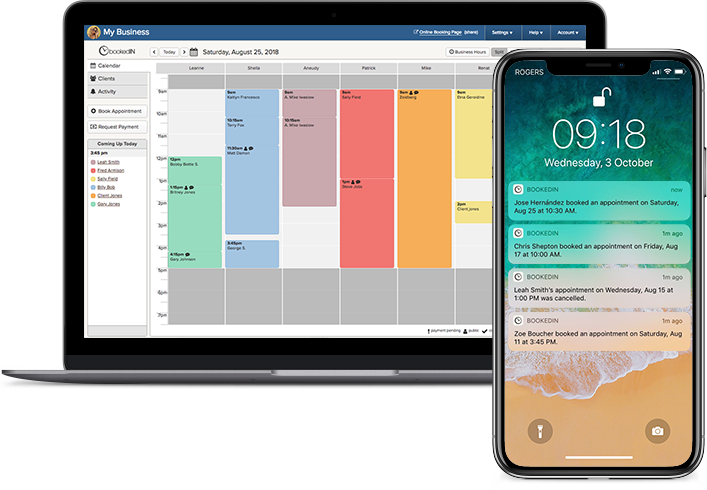
Tattoo appointment scheduling made easier
With tools like automated client reminders, calendar syncing, deposit collection, and more.
Tattoo Pricing Frameworks To Help You Set the Right Rates
Now that you know what goes into a tattoo price, let’s get into the actual models you can use to set your rates.
If you’ve been stuck on how much to charge, these frameworks give you a structured way to land on a number that’s fair, sustainable, and easy to explain to clients.
You don’t have to pick just one, either. Plenty of artists use a combination depending on the type of work they’re doing.
The cost-plus framework
This one’s the most straightforward. Here, you figure out what it actually costs you to do the work, then add your desired take-home pay on top.
Start by adding up your hourly overhead, like rent, utilities, insurance, supplies per session, software costs, and any other recurring expenses. Then, decide what you want to take home per hour after those costs are covered.
Finally, add a buffer for taxes, slow weeks, and the unpaid time you spend on things like consultations, design work, and admin.
Here’s a rough example of how that math might shake out: Say your overhead works out to about $40 an hour, you want to take home $80 an hour, and you add a 20% buffer for taxes and downtime. That puts your minimum hourly rate somewhere around $150.
The tiered pricing framework
Instead of charging one flat hourly rate for every type of tattoo, tiered pricing lets you set different rates based on how complex or skill-intensive the work is.
That way, you can charge more for the tattoos that demand more from you without raising every rate across the board. A simple three-tier structure might look like this:
- Base tier: Standard line work, small flash pieces, simple lettering — your regular hourly rate
- Mid tier: Color work, detailed shading, medium-sized custom pieces — a step above your base rate
- Premium tier: Large-scale custom work, realism, fine line, Japanese, or other specialty styles that take significantly more time and skill — your highest rate
Tiered pricing is especially helpful if your portfolio spans a range of styles and sizes. It also gives clients a clearer picture of why a detailed full-color half-sleeve costs more per hour than a small script tattoo.
The shop minimum plus hourly hybrid
A shop minimum is a base price that applies to every tattoo, no matter how small or simple. It helps ensure you’re never losing money on tiny pieces once you factor in setup, sterilization, consultation time, and supplies.
The way this typically works is you set a minimum (say, $150) that covers anything up to a certain time threshold, usually the first hour. After that, your hourly rate kicks in for any additional time.
To figure out your minimum, think about how much it costs you just to start a tattoo: prepping the station, sterilizing equipment, doing a quick consult, applying the stencil, and breaking everything down afterward.
Those costs are the same no matter how small the tattoo is, so set your minimum high enough that even your quickest piece still covers them.
The day rate framework
Day rates work best for large, time-intensive pieces — think full sleeves, back pieces, or multi-session custom work.
Instead of tracking hours, you and the client agree on a flat rate for the full session, usually somewhere in the range of six to eight hours. That makes pricing more predictable for both sides.
As a rough benchmark, day rates in the tattoo industry often land somewhere between $800 and $2,000 or more, depending on your experience, demand, location, and the complexity of the work.
One thing to keep in mind: A full day rate can feel like a big commitment for clients, especially newer ones.
So, it helps to spell out what’s included (e.g., design time, breaks, your touch-up policy), and to offer a half-day option for smaller large-scale works that don’t need a full session.
How To Estimate the Price of a Tattoo for a Client
Knowing your rates is one thing. Quoting an actual piece for an actual person, before you’ve even drawn anything, is another.
Fortunately, at this point you don’t need to worry about nailing an exact number. You just have to be clear about how you’re pricing and honest about what you don’t know yet.
Here’s how to think through estimating the price of a tattoo for a client:
Start with a rough time estimate
Most pricing comes down to time, so the first thing to gauge is roughly how long a piece will take you. Look at the size, the placement, the level of detail, and the style, then compare it to similar work you’ve done before.
For instance, a palm-sized piece of black line work is a very different time commitment than a heavily shaded, full-color version of the same size.
Give a range, not a single number
For anything beyond a simple flash piece or a flat-rate tattoo, quote a range rather than one fixed figure.
A range gives you room for the things you can’t predict, like a client needing extra breaks, a design growing once you start sketching, or skin that takes ink slower than expected.
Say something like, “This’ll likely land between $400 and $550 depending on how the detail comes together” sets a realistic expectation while still giving the client a number to plan around.
Just keep the range narrow enough to be useful. A quote like “somewhere between $200 and $900” doesn’t really give the client a good idea of how much they’d be paying.
Be upfront about what could change the price
Whatever number you give, explain what might move it. If the client adds elements during the design stage, asks for more detail, or wants to size the piece up, the price goes up too, and saying so early prevents an awkward conversation at the end of the session.
The same goes for your deposit, your minimum, and any design fee. Lay those out before the client books their appointment, so the full picture is clear from the start. Clients are less likely to push back on a higher price when they understand how you got there.
This is also where having your pricing details visible at booking does a lot of the work for you. Fortunately, with a scheduling tool like Bookedin, you can show your tattoo service prices and deposit requirements on your booking page.
Schedule a free demo to learn more
Common Tattoo Pricing Mistakes To Avoid
Even with a solid pricing model in place, a few common habits can quietly eat into what you earn. Below are the mistakes worth watching for.
- Undercharging to compete: Setting your prices low to undercut nearby shops might win you bookings, but it often attracts clients who shop on price alone and brings in less for the same work.
- Forgetting your unpaid time: Consultations, design work, answering messages, prepping, and cleanup all take time you don’t bill for directly. If your rate only accounts for the hours you’re tattooing, you’re undercharging without realizing it.
- Skipping a shop minimum: Without a minimum, small pieces can cost you money once you factor in setup and supplies. A minimum makes sure even your quickest tattoo covers what it takes to do it.
- Never revisiting your rates: Plenty of artists set their prices once and leave them untouched for years, even as their skills sharpen, demand grows, and costs climb. Review your rates regularly so you know when it’s time to raise them.
- Being vague about price upfront: Dodging the money conversation until the end of a session almost always backfires. Be clear about your rates, deposits, and what could change the total before the client books, not after.
Also read: Should Your Tattoo Shop Offer Payment Plans?
Final Thoughts on How To Price Tattoos
There’s no universal right answer for how to price tattoos, but there is a right answer for you — and getting to it is mostly a matter of doing the math and being clear with your clients.
Pick the pricing model (or mix of models) that fits the work you do, run your real costs so your rate actually covers them, and lay out your numbers honestly before anyone books.
Get those pieces right and pricing stops being a stressful guessing game. It becomes just another system you can rely on, which frees you up to focus on the actual tattooing.
Stop losing time in your messages
Let clients book a time and confirm instantly — no back-and-forth.
- ✓ Take deposits
- ✓ Automatic reminders
- ✓ Calendar sync
- ✓ Mobile-friendly booking
FAQ About Pricing Tattoo Services
About the Author

The Bookedin Team is made up of writers, marketers, and people who genuinely understand the day-to-day of running a service business. Our articles cover everything from scheduling and client management to marketing and business growth — because running a service business is no small feat.