How To Get More Photography Clients
Trying to figure out how to get more photography clients but you’re not sure where to start? Or wondering what it actually takes to get noticed (and hired) by the people you want as clients? Either way, you came to the right place.
Whether you’re a beginner photographer or have been in this career for quite some time, you’ll definitely find something here that can help you out.
10 Ideas for How To Find Clients as a Photographer
Below are practical tips to bring in more photography clients, none of which require having a huge budget or overhauling how you already work.
1. Build a portfolio around the kind of work you want to be hired for
More often than not, people will hire you for what they see. So, your portfolio should reflect not just what you’re capable of but also what you want people to come to you for.
If your gallery is mostly engagement photos you shot for friends, you’ll likely keep getting asked to shoot engagements. Doesn’t matter if what you actually want is commercial work for local brands.
Go through every photo on your website and social media page, then take out most of the ones that don’t fit the direction you’re heading. That might include older work that no longer matches your style or shoots that went fine but aren’t your best.

Easiest way to manage sessions & clients
With tools like 24/7 online scheduling, automated follow-ups and reminders, payment collection, and more.
2. Focus your social media posts on getting bookings (not just likes and followers)
Most photographers spend their marketing energy on platforms like Instagram and TikTok, since these are where many people go to look at photos. Someone comparing options tends to check those photographers’ Instagram or TikTok first.
But keep in mind that the posts that collect the most likes aren’t always the ones that bring in clients. So, it’s worth paying attention to which content are actually helping you get more photography clients.
Check the saves and shares on each post (both show up in your post insights), since those are typically what someone would do if they’re considering hiring you.
Also, keep an eye out for posts that lead to you getting a booking or inquiry within a few days of going up. That’s often the most reliable signal you’ll get that a post is working — and that it’s worth doing more of that kind of content.
3. Use location tags to reach more people in your area
Adding hashtags and tags that point to where you shoot can help narrow your audience down to people nearby and those traveling to your location for something they’ll want photographed.
On each post, tag or mention the specific venue, neighborhood, and city, so your post turns up when someone searches that place.
You can also add broad hashtags (like #weddingphotography) since these can still bring in the occasional new follower or a bit of extra reach.
However, these shouldn’t be your main focus. After all, having thousands of viewers means nothing if none of those people can realistically book you.
4. Optimize your website for local search and mobile viewing
First off, include your location and specialty in your page titles. A homepage titled like “Jamie Ross Photography” doesn’t give Google enough information about you. That means your page likely won’t show up in local searches.
On the other hand, something like “Jamie Ross Photography | Family Photographer in Austin, TX” spells out exactly what you do and where you’re based, which are what Google needs to match you to a local search.
Also, make sure your website loads fast enough even on mobile. Most potential clients will look you up on their phone, and if your page takes too long to load, they might just give up and check some other photographer’s site instead.
Oversized photos are usually what slows a site down, so shrink your files to a web-friendly size instead of uploading full-resolution files. There are also free tools (like PageSpeed Insights) that scan your page and point out what’s causing lags.
5. Get your business added to relevant directories
Some people skip search engines entirely and go straight to a directory to find a photographer, especially when they’re planning something specific like a wedding.
Those directories also tend to rank high on Google, so your listing or profile can turn up in search results even if your own website doesn’t.
Getting on one is usually more straightforward than you might expect. Most directories let you create your own listing: You sign up, verify that you own the business, then fill in your details, upload a set of photos, and publish.
General listings like Yelp, Bing Places, and even your local chamber of commerce directory are free, and they take only about 20 minutes each to set up.
Industry-specific platforms like The Knot and Zola also let you create your own profile in their directory, though you’ll likely need to go for a paid option to get better visibility.
Note: Your scheduling software might have one as well. If you use Bookedin, your business is listed in its directory, along with a link to your booking page, so anyone browsing can easily book with you.
6. Improve your chances of showing up in local searches
A search phrase like “photographer near me” almost always comes from someone who’s actively looking and needs to hire someone (usually soon). The same goes for other searches like “wedding photographer SF” or “family photos near me.”
Being one of the names that turn up in those results is how you get more inquiries from potential clients. We’ve already covered optimizing your website in a previous item.
So now, the main thing to focus on is your Google Business Profile. That’s how your business shows up on Maps and in that group of local businesses Google displays first. If you haven’t yet, create your profile.
Then, upload photos and put in your details like what type of photography you do, where you work from, where you’re willing to shoot, and what your business hours are. Also, add your booking link to it so anyone can easily check your availability.
You should pay attention to your reviews, too. These affect how you rank in local search, and help convince someone to pick you over another photographer. So, make it a habit to ask clients to leave you a review on platforms like Google and Yelp.
Online scheduling app that does the heavy lifting for you
Let clients grab a spot on your calendar anytime, so you're not stuck handling bookings.
7. Show your pricing, or at least a starting point
Some photographers keep their prices off their website on purpose, worried that a number will scare people off before they’ve even looked at the work. However, that often does more harm than good.
Someone who likes your work has to send a message to find out whether you’re even in their range, and some people might not want to do that.
The ones who do message you might turn out to have a budget nowhere near your rates — something you could have both known from the start, rather than after a week of back-and-forth messages.
That’s why it’s good to publish at least a starting price. It can be something as simple as “Family sessions start at $350” or “Wedding coverage from $2,800.” The point is to give people enough information to decide whether to reach out for more details.
And no, you don’t have to publish a full price list if you’d rather not. A starting number and a short note about what affects the final cost (e.g., hours of coverage, number of edited images, travel) are usually enough.
8. Make a habit of asking clients to tag you when they post
When clients post their photos, a tag on that post puts your work in front of people you can’t otherwise reach. That includes their friends and family nearby who might also be looking for a photographer to shoot something similar.
Sure, you can’t control when someone posts and whether they’ll tag you, but you can make it easier and more likely. Here’s how to go about it:
- Send clients a few sneak peeks a day or two after the shoot. That’s when they’re most excited about the photos and usually most likely to post. So, give them three or four edited images early on while they wait for you to finish the full gallery.
- Tell them how to tag you. When you send the sneak peeks, add a line like “If you post any of these, feel free to tag me [your social media handle]” to your message. Plenty of clients would happily credit you, and they just need a quick reminder.
- Ask permission to repost, then follow through. Resharing your clients’ posts to your Stories gives you fresh content without shooting anything new. Plus, it shows people considering you what the experience looks like from a client’s side.
9. Offer your services to local businesses, too
Most photographers build their entire business around individuals like families, couples, graduations, or personal headshots. Those bookings tend to be one-time, making it harder to get steady, recurring work.
This is why local businesses are worth adding to your target clientele, as they tend to need photography services more often.
Think restaurants that need food and interior shots every few months, or real estate agents who constantly need photos for listings. Once they’ve worked with you and are satisfied with the results, they’ll likely hire you again and again.
Now, when you reach out, keep the email short and lead with what you can do for them. Dropping by in person can work too, especially for businesses where the owner is usually on site.
Just make to go during a quiet stretch, so you’re not bothering them much. Say your piece in a couple of minutes, have a few relevant photos ready on your phone, leave them your business card, and follow up by email a day or two later.
10. Run mini sessions to fill slow weeks
Mini sessions are short, back-to-back shoots (usually 15 to 30 minutes each) that you run on a single day at one location. You set the date, cap the number of spots, charge a flat rate, and deliver a smaller gallery than you would from a full session.
Besides helping fill quiet stretches in your calendar, mini sessions are also one of the most efficient ways to bring in new clients whom you might not normally get (usually because they don’t want to spend much on a photographer).
For example, someone still unsure about committing to a $400 full session may be fine booking a $150 mini to see how it goes. And some of those people will come back for a longer session once they know what working with you is like.
Get More Photography Clients & Let Bookedin Handle the Scheduling
Figuring out how to find photography clients comes down to consistency more than anything else.
Most of the tips on the list above pay off after a few months of doing it. That’s why it’s best to stick with a few tactics for a whole season, rather than switching tactics every few weeks.
You don’t need to act on all of these ideas at once, either. Some only take an afternoon while other take months to complete, so start with whatever fits the time you have right now.
And once the inquiries start coming in, make sure booking with you is as simple as can be.
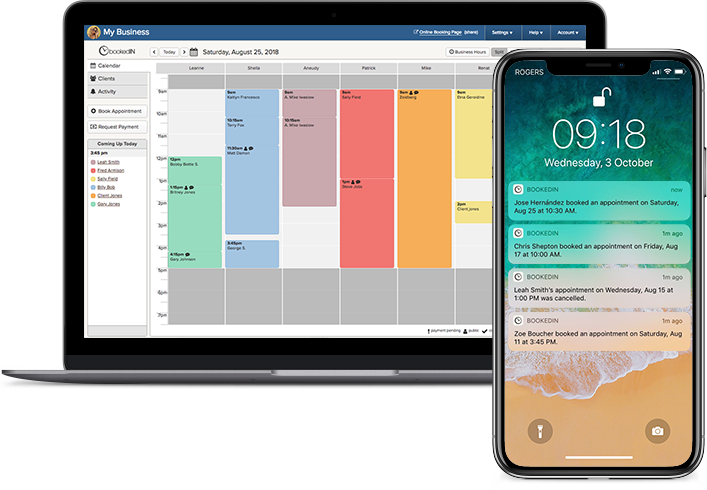
With a scheduling tool like Bookedin, potential clients can instantly see your availability and schedule themselves. You can also use it to collect deposits upfront, send automated reminders, and take other repetitive tasks off your plate.
Keep your business organized & booked solid
Everything you need to manage your schedule in one place.
- ✓ Take deposits
- ✓ Automatic reminders
- ✓ Calendar sync
- ✓ Mobile-friendly booking
FAQ About How To Get More Photography Clients
About the Author

With over a decade of experience across startups, online publications, and agencies, Marcy is all about delivering content that connects brands with the audiences they're trying to reach.